
Asymmetric Digital Records as Proof in Unwritten Multi Party Ventures
Unilateral digital records prove individual activity but fail to establish mutual assent, leaving unwritten multi-party ventures vulnerable to competing equity claims.

Page
A founder sits across from two co-builders after eighteen months of work to find they are working off three different timelines. Each brought their own assumptions about who owned the core intellectual property, how equity would be split, and where their operational roles ended. Early agreements had lived in informal conversations, late-night calls, and unarchived chat rooms.
Physical assets are minimal and corporate filings remain unfinished, but commercial revenue has started coming in. Right as the money begins to matter, memories diverge.
Each person produces a personal archive to back up their initial claim. One holds local terminal logs, commit histories, and deployment access keys. Another presents calendar entries for client introductions, private WhatsApp exchanges, and credit card statements for early cloud hosting.
The third points to design canvases, brand assets, and marketing collateral stored on a private drive. Every set of records is unilateral, created on personal hardware, kept in isolated accounts, and never shared systematically while the project was starting out.
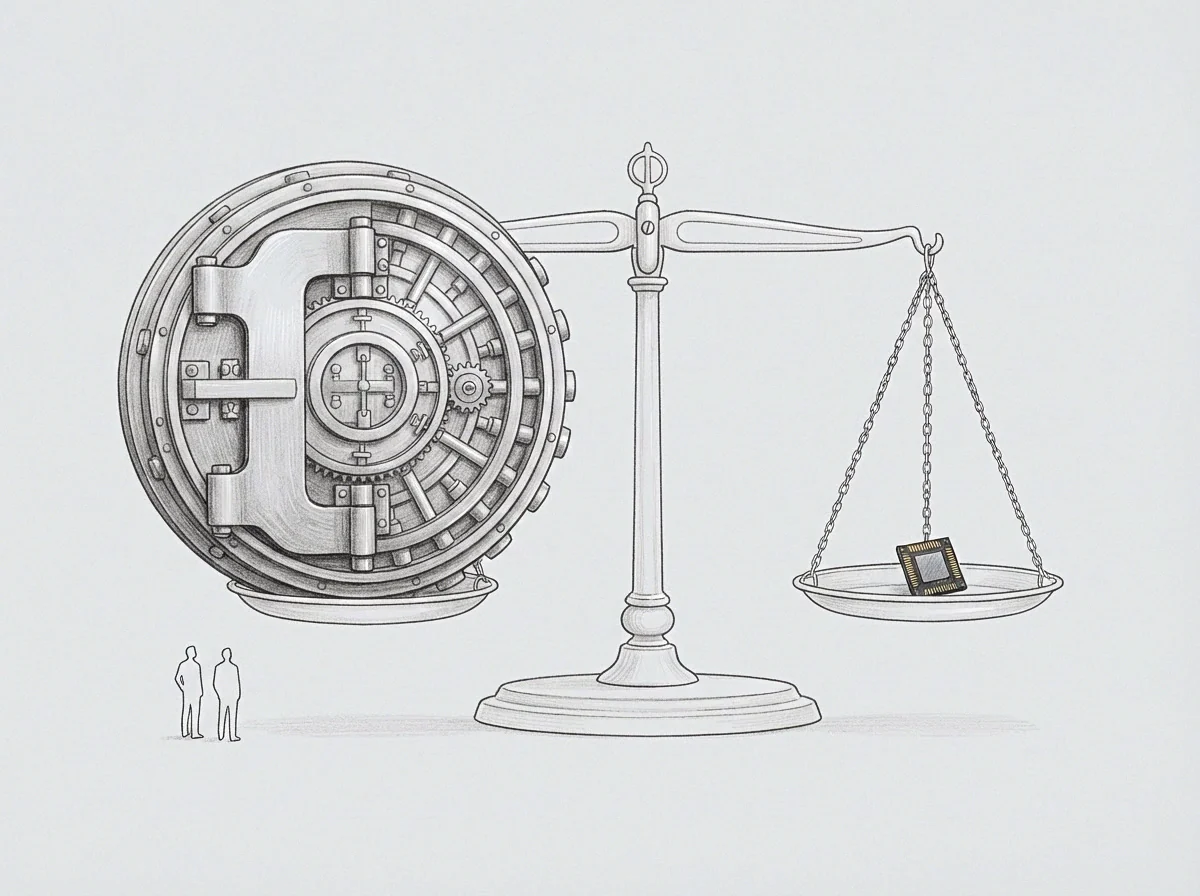
A unilateral record preserves only the operational reality of the device that created it.
An unwritten venture leaves legal standing undefined, making these private digital traces the primary evidence of intent. Collaborators often assume system timestamps and detailed local logs will convince others to accept their view. To the other side, however, an unshared record looks unfamiliar, especially when they hold their own consistent log covering the exact same calendar days.
This clash highlights how limited asymmetric digital records are when resolving an informal partnership.
These conflicting accounts stem directly from modern collaborative tools. Distributed systems fragment the project history just as easily as they split up computing tasks. Without a single, shared repository of commitments, each builder constructs a private record out of their own daily output.
That gap stays hidden while the work remains speculative, but shows up completely once real revenue forces the records to be reconciled.
A technical log rarely functions as proof of a binding shared intent.

Trace
Digital records generated in informal ventures differ based on where data lives and who can edit it. A software repository records commits in order, but those timestamps can be backdated with basic local commands before pushing to a remote server. Server access logs prove system maintenance, but capture none of the business development conversations held over voice calls.
Unilateral documents naturally create evidentiary gaps because each collaborator serves as the only custodian of their own files.

Structural Categories of Informal Electronic Evidence
Informal ventures leave behind several types of digital traces, each with different levels of mutability, visibility, and corroboration.
- Unilateral Local Logs include shell histories, text editor files, local database dumps, and export files created without shared visibility.
- Centralized Third-Party Infrastructure encompasses hosted chat channels, cloud platforms, payment processor transaction sheets, and source control repositories with public audit histories.
- External Corroborative Records involve incoming bank transfers, service notifications, customer invoices, and supplier receipts that tie a transaction to a specific calendar date.
Enforcing an unwritten venture legally requires showing mutual assent, shared risk, and an agreement to split profits and losses. Unilateral logs prove that work was done, but not that it was given for a specific equity share. A git commit shows code written at a given timestamp by a cryptographic key, but says nothing about whether the author was an equity partner, a contractor, or a volunteer.
System logs verify physical interaction with infrastructure while leaving the underlying commercial promise unstated.
Evidentiary problems widen when one person controls the main hosted workspace. If the account administrator revokes access during a dispute, others lose their link to collaborative records and are left relying on local exports, browser caches, and screenshots. These fragmented files carry far less weight than full platform logs, putting the locked-out contributor at an immediate disadvantage.
Administrative access can easily be used to alter or sanitize shared collaborative records.

Delta
Without a formal agreement, personal recollections of past promises shift quickly. Studies on shared memory show that people naturally prioritize their own contributions over those of others. Combined with asymmetric digital records, this leads partners to interpret vague text messages as proof of their own position.
As financial stakes grow, the gap between memory and written evidence widens.

Reconstruction of Operational Milestones
The gap between private memory and recorded facts shows up clearly in how different platforms log the same event. Asymmetric records capture operational details, but rarely provide what an unwritten partnership needs for resolution.
| Artifact Category | Local Account Representation | Counterparty Interpretation | Evidentiary Limit |
|---|---|---|---|
| Hosted Git Repositories | Irrefutable proof of primary venture authorship and initial sweat equity. | Routine technical execution under the operational direction of other stakeholders. | Proves code delivery without establishing an equity partnership agreement. |
| Direct Message Archives | Continuous documentation of strategic consensus and casual partnership splits. | Informal brainstorming sessions never intended as binding commercial agreements. | High contextual ambiguity with frequent contradictions across time. |
| Cloud Billing Receipts | Capital contributions demonstrating risk assumption and ownership rights. | Reimbursable operational expenses incurred without collective pre-authorization. | Fails to distinguish capital investment from a basic short-term loan. |
| Client Communication Logs | Sole origination of commercial revenue and business relationship custody. | Standard client service execution using shared venture branding. | Demonstrates agency representation without defining profit distributions. |
Informal ventures usually break down because participants mistake operational presence for ownership. A contributor logging fourteen hours a day in a terminal assumes machine output proves partnership. At the same time, the co-builder securing pilot agreements over dinner assumes customer relationships outweigh technical work.
Both hold records that validate their individual effort, but neither has evidence defining an agreed equity split.
This divergence solidifies as each person reviews their archive in isolation, reinforcing initial assumptions long before formal discovery forces the records together.
Freeze
When informal collaboration stops, behavior changes overnight into an operational freeze. Once someone realizes their view of ownership conflicts with a partner’s, casual communication halts. Informal calls end, shared document editing stops, and each side retreats to protect their position—saving log snapshots, revoking administrative tokens, and calculating their provable work.

Which Evidentiary Signals Trigger Commercial Paralyzation?
The freeze occurs when digital asymmetry turns from a background issue into a legal barrier. This halt usually follows specific commercial milestones:
- External Capital Demands emerge when an investor or grant agency requires formal incorporation and clear IP assignments from all contributors.
- Commercial Revenue Arrival materializes when customer payments hit a bank account controlled by a single founder, triggering demands for payouts.
- Administrative Excommunication occurs when one collaborator changes passwords, API credentials, or code repository permissions to lock out others.
- External Trademark Registration takes place when one party registers the project name without written approval from the rest of the team.
During a freeze, asymmetric control gets weaponized. A partner with local copies of core database schemas might threaten a public fork, while the one holding payment processors or domain accounts withholds funds. Each uses their control over a single piece of infrastructure to push for a retroactive deal.
A commercial freeze measures the exact evidentiary distance between the accounts held by informal builders.
In forensic audits, electronic discovery frequently shows that early chat records were edited or selectively saved. Taking screenshots while leaving out context severely damages credibility. Reconstructing an unwritten venture accurately depends on complete, raw message metadata rather than curated excerpts compiled after a conflict starts.
Prior to formal filings, an unwritten venture can easily be characterized as an exploratory open-source project.

Table
Resolving competing records without a contract requires looking at ongoing conduct. Over time, actual behavior carries more weight than isolated digital statements. When three builders collaborate informally, their financial actions provide the context needed to interpret fragmentary records, which must be mapped directly against documented transactions.
A key indicator is how money moved. If customer payments went into one personal account and were paid out to others as flat compensation, the setup reflects an employer-employee or contractor structure. If payouts fluctuated with monthly margins and contributors covered expenses out of pocket, the pattern points to an informal partnership.
Chat logs are interpreted in light of this financial behavior.
When an unwritten venture breaks down over irreconcilable records, legal doctrines like quantum meruit often apply. A contributor who cannot prove an equity agreement may still claim the market value of their labor. In that case, local development logs, commit timestamps, and task receipts no longer serve as proof of ownership; they become a timesheet used to calculate compensation at standard rates.
Operational behavior over eighteen months consistently overrides a single ambiguous message sent during the initial week of brainstorming.
Modern software development introduces another challenge: modular code isolation. If two developers build separate services, each may hold sole control over their own repository. If they split, the question becomes whether the combined codebase constitutes a joint work under IP law or a set of separate modules.
Records showing continuous integration and shared code reviews point toward joint authorship, preventing either developer from pulling their code out to launch a competing product.
Foundational code contributions may be interpreted as carrying only a revocable, non-exclusive license to the group.

Anchor
Fixing asymmetric digital records requires shifting from informal teamwork to a structured foundation, replacing separate personal logs with written, shared commitments. Builders who notice diverging recollections need to align their terms before commercial milestones elevate the stakes. Waiting for an investment round or funding event to settle ownership virtually ensures it will happen through costly legal disputes.
The first step is a joint audit. Everyone brings their local files, message histories, and expense sheets into a shared workspace. The goal is not to argue past decisions, but to establish a factual baseline of contributions—who built which parts, what money was spent, and who controlled administrative access.
This shared record anchors the project’s history to date.
After the audit, all parties execute a formal IP assignment and equity agreement. This document replaces earlier informal texts, conversations, and conflicting logs with a single contract. It transfers individually created IP to a central corporate entity and defines equity shares or settlement terms for past contributions, superseding past digital trails.
Failing to formalize leaves everyone vulnerable. A company weighed down by conflicting records cannot secure venture funding, sign institutional customer contracts, or complete an acquisition. It remains vulnerable to anyone holding local logs and an unaddressed claim.
Delaying structure risks stalling the venture just as it reaches its peak potential.
A standard integration clause in the assignment agreement terminates any rights previously claimed across informal channels.