
Detrimental Reliance Evidence in Early Stage Equity Ownership Claims
Detrimental reliance claims convert uncompensated labor into equitable equity interests by establishing reasonable reliance on promises that caused verifiable economic injury.
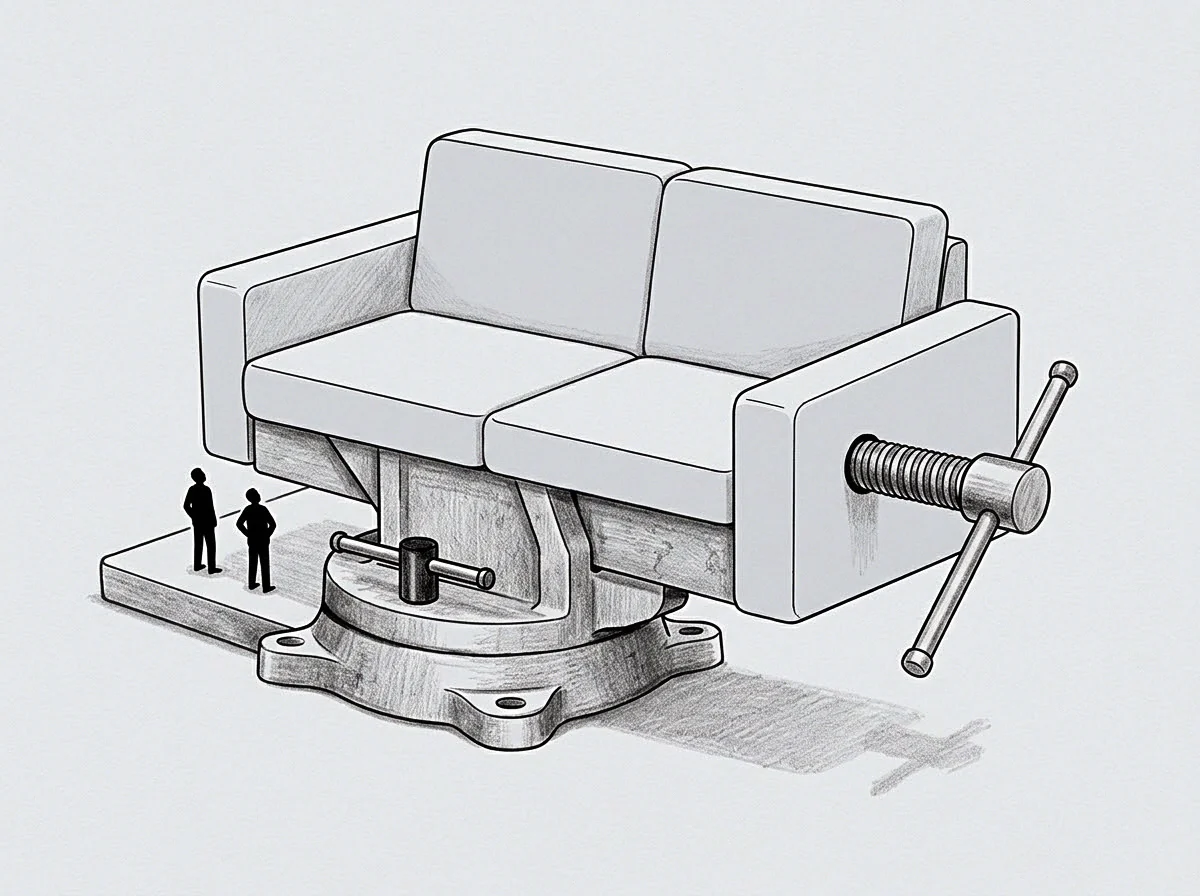
Reliance

The Abandonment of Alternative Compensation
An operator resigns from an established technology company after five conversations with an early stage founder regarding a fifteen percent equity stake. The founder sends email updates containing product mockups, strategic plans, and references to shared risk, yet no formal option agreement or restricted stock stock purchase contract reaches the inbox. The operator works for fourteen months at twenty percent of prevailing market salary, funding personal living expense out of savings while engineering the initial core architecture.
Memory adapts.
Inside the founder’s mind, the cash reduction represents an operational necessity while the company remains unfunded, with equity considered a future discretionary grant subject to board creation and milestone delivery. Inside the operator’s mind, the forgone salary represents direct consideration already tendered for an agreed equity position. Neither account is shared during product development.
Silence creates reliance.
The financial cost of an uncompensated position accumulates long before the title or cap table is finalized.
When funding arrives, the founder presents a equity grant offering two percent subject to a four-year vesting schedule with a one-year cliff. The operator rejects the grant, citing the earlier oral agreement and fourteen months of uncompensated software delivery. The cap table freezes.
The delta between fifty percent of a promised future equity pool and two percent of an issued stock option plan measures the financial injury. The legal core of detrimental reliance in equity claims rests on this change of position: the claimant took concrete action, suffered verifiable loss, and altered commercial behavior based on a reasonable assumption generated by the other party’s conduct.
Helpful context around equity claims appears when evaluating whether economic sacrifices qualify as reliance losses or voluntary risks. Courts require the claimant to demonstrate that their change of position was directly induced by the promise rather than by general entrepreneurial optimism. The operator who turns down a competing job offer must show written evidence or witness testimony corroborating that the promise of equity was the proximate cause of the refusal.
A equity interest discussed in loose terms across informal channels rarely carries statutory weight without evidence of mutual assent. Yet when equity promises lead one party to invest capital, patent intellectual property in the corporate entity’s name, or forgo guaranteed market wages, equitable remedies begin to constrain the legal owner’s discretion.
The operational work had been performed as general consulting help, while any discussion of ownership remained contingent on securing formal institutional venture capital.

Proof

When Does Unpaid Labor Convert Into Equitable Equity?
Demonstrating an equitable ownership right without an executed cap table instrument demands contemporaneous records rather than post hoc testimony. Reconstructions offered during litigation carry low credibility because both parties construct self-serving narratives once asset valuations escalate. Proof demands records.
The claimant must present artifacts generated during the operational build that validate both the promise and the reliance.
Electronic mail threads, commit logs, messaging archives, and third-party vendor filings form the evidentiary baseline. A note stating that an operator is building equity through sweat labor carries weight when paired with proof that the founder observed the work without disclaiming the characterization. The record outlasts memory.
A clear written disclaim sent early eliminates the reasonable reliance required to sustain an equitable ownership claim.
Legal doctrine distinguishes between claims rooted in promissory estoppel and those rooted in quantum meruit. Promissory estoppel seeks to enforce the clear promise of equity itself, requiring proof of a clear promise, reasonable reliance, and unconscionable injury. Quantum meruit operates as a restitutionary claim, seeking the fair market value of the services rendered to prevent unjust enrichment of the corporate shell.
- Contemporaneous Written Memoranda captures emails, text messages, and internal wiki entries created during active operations that explicitly reference equity ownership percentages or specific vesting terms.
- Third-Party Attestations relies on statements made to investors, accountants, or prospective hires where the founder explicitly identifies the claimant as an owner or partner.
- Direct Financial Disinvestments documents bank withdrawals, personal loans taken, or verifiable job offers declined specifically to execute duties for the enterprise.
- Intellectual Property Assignment Records tracks transfers of domain names, patent applications, or code repositories executed by the claimant without concurrent cash payment.
The defense against detrimental reliance claims usually focuses on the indefiniteness of the alleged agreement. If essential terms such as vesting schedules, allocation calculation bases, or liquidation preferences remain unstated, courts frequently refuse to construct an equity award. Equity awards require precision.
Instead, tribunals relegate the claimant to cash compensation calculated by reference to standard hourly rates for comparable technical consulting services.
An explicit disclaimer clause embedded in an early contractor agreement or non-disclosure document destroys the element of reasonable reliance, converting subsequent labor into uncompensated risk.

Paper

Documentary Thresholds in Unsigned Equity Arrangements
Physical records determine whether an informal arrangement transitions into an enforceable legal interest. The reliance claimant often relies on draft shareholder agreements, pitch decks presented to external investors, or tax filings. A pitch deck listing an operator as a co-founder with a designated ownership percentage acts as a party admission in litigation contexts.
Expectations branch early.
The evidentiary weight of documentation depends on its proximity to the operational performance. Materials created concurrently with the uncompensated labor carry higher evidentiary value than summary documents produced during severance negotiations.
| Legal Doctrine | Primary Evidentiary Anchor | Remedy Measured By | Defeated By |
|---|---|---|---|
When written records contradict oral promises, courts routinely enforce the document over the recollection.
Corporate records held by third parties often provide neutral verification. Email exchanges with regulatory counsel, state formation documents listing initial managers, or software repository authorization logs establish the functional role of the claimant within the company structure. Reliance alters cash positions.
The integration clause in a subsequently executed agreement often functions as an evidentiary barrier. When an operator signs a standard consulting contract containing an integration clause that disclaims all prior agreements, any prior oral promises of equity dissolve. The signed paper overwrites the unwritten history.
Verbal assurances given in informal settings retain enforceability only when accompanied by continuous, unambiguous performance that permits no other reasonable commercial explanation.

Valuation

Quantifying Reliance Injury Against Equity Expectation
Calculating the financial remedy in detrimental reliance actions requires choosing between two primary valuation metrics. Expectation damages place the claimant in the position they would occupy had the equity promise been fulfilled. Reliance damages restore the claimant to the economic position occupied prior to reliance on the promise.
The delta grows quietly.
In early stage technology enterprises, calculating expectation damages presents severe analytical difficulties. Unfunded entities possess volatile, highly speculative valuations. A ten percent equity stake in a venture that has raised no institutional capital lacks a clean dollar figure.
Courts often reject expectation damages in early claims because the enterprise value cannot be established with reasonable certainty.
- Establish baseline market value for the professional services rendered by gathering salary surveys for equivalent roles in comparable geographic markets.
- Subtract all actual cash compensation, stipends, or expense reimbursements paid to the operator during the reliance period.
- Calculate opportunity cost by documenting actual compensation surrendered from prior verified employment positions.
- Apply statutory interest rates to the uncompensated wage balance from the date of performance to the date of settlement or judgment.
Reliance damages present a simpler evidentiary standard. The claimant proves what they actually surrendered: twelve months of lost salary from a previous employer, direct capital contributions made to cover software hosting charges, or out-of-pocket payments to legal counsel for trademark filings. Courts prefer reliance metrics when enterprise equity remains unpriced or subject to extreme market risk.
Unfunded promises collapse.
What remains unresolved is whether courts should award equity upside generated after the claimant was ousted, when that upside resulted directly from software architecture built during the uncompensated reliance period?

Stipulation

Merging Divergent Accounts Before Valuation Escalates
The gap between remembered terms and written instruments widens as enterprise valuation increases. A founder who viewed an operator as a temporary contractor becomes defensive when a secondary market transaction prices the company at a high valuation. The operator who viewed their labor as sweat equity feels exploited when presented with a standard contractor release.
The cap table freezes.
Constructing early formal stipulations protects both sides from catastrophic legal expenses. A simple memorandum of understanding specifying whether equity discussions are binding or contingent prevents the emergence of reasonable reliance. Clear terms eliminate ambiguity.
Unstated equity arrangements transfer the cost of clarity from early governance to late stage litigation.
When parties operate without formal equity documentation, the cost of resolving ownership claims routinely absorbs a substantial fraction of early seed capital. Legal fees, forensic accountant costs, and delayed financing rounds represent the tax paid for unwritten expectations. The exit conversation arrives eventually.
Preventing detrimental reliance disputes requires immediate formalization of compensation structures. If equity cannot be issued due to tax or corporate governance constraints, a written agreement must explicitly declare that no equity rights accrue prior to formal board approval and execution of definitive documentation. Failure to execute explicit disclaimers leaves the founder exposed to equitable claims on the company equity pool whenever an uncompensated collaborator leaves the building.