
Quantifying Operational Output Beyond Raw Git Commit Histories
Operational output quantification requires evaluating infrastructure stability, risk mitigation, and system refactoring telemetry alongside raw version control commits.

Gauge
Version control repositories record incremental changes to source code files, capturing file diffs, timestamps, and committer identities. This automated logging mechanism creates a high-density audit trail of software construction. Technical leaders and founders frequently treat these repository commit histories as direct surrogates for operational contribution.
Commit frequency, line insertion counts, and pull request volume offer quantifiable telemetry that appears objective, accessible, and continuous.
Activity logs differ fundamentally from operational contribution. Commit history tracks code surface mutation rather than system resolution. A developer who inserts two thousand lines of code across fifty commits produces a large footprint in version control.
An engineer who spends three weeks diagnosing a concurrency bottleneck, altering a single configuration line to stabilize production, leaves a minimal repository footprint. Commits measure activity. Operational output measures system stability, risk reduction, and functional alignment.
When organizations evaluate operational output through raw commit counts, they measure proxy activity instead of functional value. High commit volume often reflects fragmented task execution, lack of local testing, or rapid iteration over superficial interfaces. Low commit volume routinely masks high-leverage architectural work, including domain modeling, infrastructure hardening, third-party integration clearing, and cross-team dependency resolution.
Operational work sits between commits.
Measuring engineering output by repository commit volume penalizes structural refactoring while rewarding superficial code generation.
Evaluating technical contribution through git history alone creates a structural bias toward additive changes. Maintenance work, operational unblocking, infrastructure migration, and architectural consolidation remain largely invisible within standard commit dashboards. Software systems accrue operational debt when metrics incentivize rapid line creation over long-term stability.
The cost of relying on volume proxies is the systemic misallocation of recognition and compensation, culminating in operational failure when foundational maintenance remains unperformed.

Noise
High volume in repository logs frequently signals exploratory churn or fragmented task breakdown rather than system progression. When two operators evaluate a shared building period, their metrics of contribution diverge based on what each party tracks. One party observes code updates published to remote branches.
The other tracks business continuity, deployment reliability, and operational stability. Divergent metrics yield divergent accounts of value creation.
Assume an enterprise software arrangement spanning two years between a lead technical founder and an operational partner. The arrangement carries no pre-agreed framework for measuring non-code contributions. Take the following worked parameters: the technical founder generates 1,400 commits, adding 80,000 lines of code across 120 feature branches.
The operational partner generates 60 commits, concentrated in deployment scripts, schema migrations, and configuration updates. The operational partner also spends 1,500 hours orchestrating customer integrations, clearing regulatory security compliance requirements, and refactoring third-party service dependencies.
At the end of the two-year build period, equity distribution or exit compensation comes under review. The technical founder presents the version control log as empirical proof of holding eighty-five percent of total operational output. The repository log records activity.
The operational partner presents production uptime records, compliance certifications, and enterprise contract fulfillment data as proof of delivering equal operational value. The two accounts are incompatible. Each account relies on a complete, self-consistent dataset.
The delta between these accounts represents unmeasured operational capacity. The technical founder views the partner’s low commit volume as minimal participation. The partner views the founder’s high commit volume as technical debt generation that required continuous operational containment.
Activity is not impact. Neither party lied; their metrics simply captured different layers of the organization. The exit reveals the gap.
Unmeasured maintenance creates divergence. When code repositories serve as the sole record of labor, non-code operational tasks become invisible work. This glue work includes staging environment maintenance, pipeline repair, vendor API troubleshooting, technical documentation, and customer success unblocking.
When this work goes unrecorded, the person executing it accumulates uncounted operational hours while the person writing feature code accumulates visible repository activity.
The unrecorded capacity spent maintaining operational infrastructure is charged to whichever party failed to establish non-git performance telemetry.
When operational output is challenged during equity rebalances or exit negotiations, the party relying on repository volume relies on visible artifacts. The party who performed operational stabilization lacks a matching automated audit trail. Paraphrasing the technical founder’s position: the repository record demonstrates daily building effort while non-code operational tasks represent peripheral administrative overhead.

Matrix
Evaluating operational output across technical organizations demands structural criteria that capture both code mutations and system administration work. Git commit histories reflect only one dimension of technical execution. A complete operational measurement model incorporates system state changes, deployment stability, technical debt reduction, and operational unblocking.
Operational output measures stability.
Organizations require telemetry that evaluates technical contributions across both repository mutations and operational execution layers. The baseline criteria must distinguish between additive code production and structural risk mitigation.
| Evaluation Dimension | Repository Proxy Metric | Operational Output Metric | Systemic Divergence Risk |
|---|---|---|---|
| Execution Velocity | Commit frequency and pull request volume | Mean time to operational state resolution | Incentivizes small, superficial commits over complex system bug resolution. |
| Work Impact | Total lines of code added or modified | Production risk exposure eliminated | Rewards verbose code implementation while penalizing concise system refactoring. |
| Maintenance Quality | Merged pull request count | Recurrent defect prevention rate | Prioritizes feature velocity over long-term infrastructure stability. |
| Architectural Health | Repository branch churn rate | Module boundary isolation ratio | Confuses exploratory code alterations with stable system design. |
| Operational Support | Documentation commit counts | Time spent clearing operational blockers | Erases infrastructure orchestration and cross-department technical alignment. |
Relying on repository proxies introduces structural vulnerabilities in performance evaluation. High line counts frequently indicate poor abstraction design or duplicate code blocks. Conversely, structural architecture work reduces line counts through modular consolidation.
Measuring line volume rewards codebase expansion while penalizing efficiency.
Operational telemetry tracks how code changes affect system environment stability. Tracked metrics must include deployment pipeline reliability, automated test suite execution speed, environment provisioning times, and incident response clearance rates. These metrics capture the functional health of the system rather than the speed of text entry into software repositories.
An operational output tracking model must weigh system risk reduction equally against feature branch creation.
Establishing explicit operational logging criteria converts implicit administrative work into verifiable output records. When contract terms specify that pipeline refactoring, compliance auditing, and database schema optimization carry equal weight to feature commits, the delta between partner accounts narrows. The stated evaluation term redefines performance value, shifting focus from raw repository output to operational system integrity.
Frame
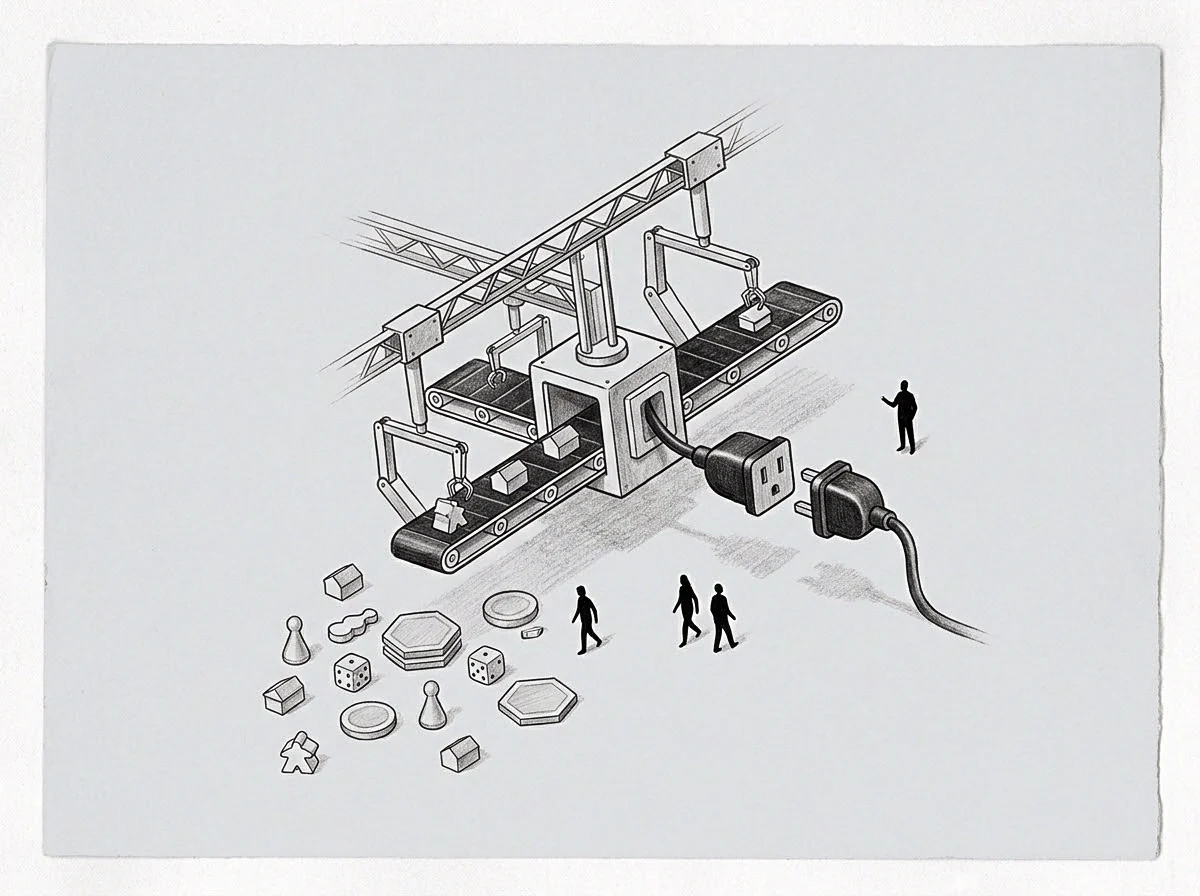
Systemic visibility relies on recording operational artifacts alongside repository logs during active execution cycles. Capture mechanisms must extend into infrastructure state updates, task management boards, deployment logs, and operational decision registries. Glue work sits between repositories.
How Does Operational Refactoring Register in System Metrics?
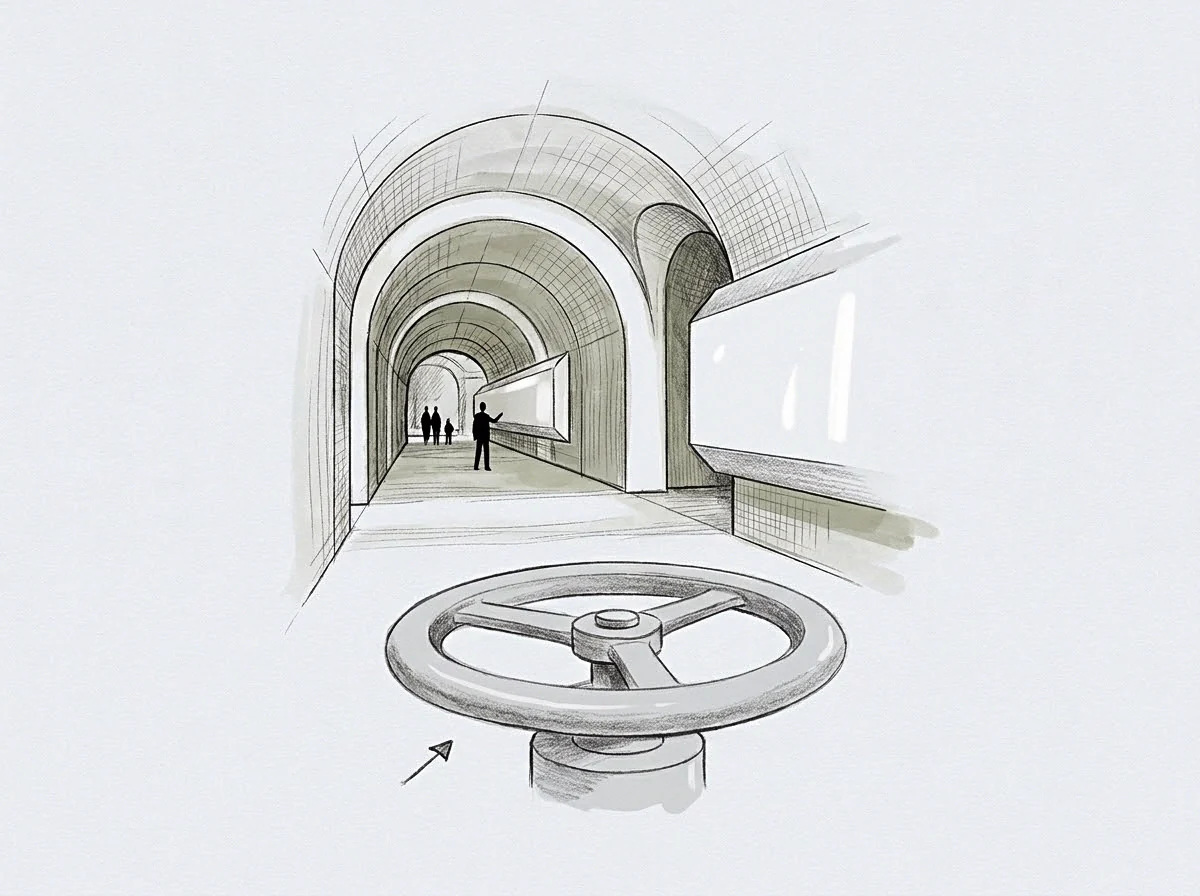
Operational refactoring registers through system performance stability and reduced deployment risk rather than high repository commit volume. A single commit that updates a database index or alters an API connection setting can reduce server latencies by fifty percent. Evaluating this change requires observing system behavior metrics, infrastructure monitoring logs, and resource usage statistics rather than counting changed lines of code.
To capture non-code operational contributions, technical teams must implement structured tracking mechanisms across non-repository operational work streams:
- System boundary stabilization measured through reductions in microservice dependency friction and integration error rates across production environments.
- Data migration schema verification recorded by successful database execution runs without data loss or pipeline rollback events.
- Operational unblocking rate tracked through closed infrastructure incident tickets and documented resolution of cross-department technical dependencies.
- Technical risk mitigation logs maintained via architectural decision records that document eliminated security vulnerabilities and compliance gaps.
The delta creates friction. When non-code contributions remain unrecorded, operational partners face valuation discounts during exit reviews. Infrastructure management, security policy enforcement, and pipeline optimization require high technical expertise yet yield minimal repository commit logs.
Tracking these tasks through architectural decision records creates empirical parity with code repositories.
Written logs anchor evaluation. Documenting system architecture choices in centralized decision records creates a historical timeline of operational intent. When an engineer restructures a cloud setup to reduce monthly operating expenses, the proof sits in infrastructure provisioning files and financial billing records.
Integrating infrastructure state changes into performance telemetry prevents operational erasure.
Operational contributions remain invisible until logged in immutable system decision records prior to exit discussions.
As a rule of thumb, any technical contribution that stabilizes production without altering application feature code must be logged in an operational decision register on the day of execution.

Record
Documenting operational contributions demands explicit alignment logs established during project execution rather than retrospective reconstruction at contract exit. Relying on memory during exit negotiations forces parties to reconstruct years of operational effort from fragmented email threads, slack messages, and memory bias. Divergent recollection is the default state of unrecorded arrangements.
The record outlasts memory.
Comparison at the exit is comparison at the most expensive moment. When partners wait until an equity split, acquisition, or separation to evaluate operational output, their accounts have already diverged. The technical developer remembers thousands of commits as the primary engine of value.
The operational lead remembers hundreds of hours of infrastructure containment, client unblocking, and compliance clearing as the foundation that allowed that code to run. Silence compounds operational debt.
Preventing account divergence requires establishing a continuous, multi-dimensional record of operational output during active building periods. This record incorporates code repository logs, architectural decision records, deployment telemetry, and infrastructure maintenance logs into a single evaluation baseline. Written terms outlast remembered ones.
By defining operational value through concrete state changes rather than raw git commit volume, technical teams ensure that non-code contributions carry verifiable weight.
When arrangements close without aligned operational records, each participant leaves holding a complete and incompatible account of value created. What remains unanswered is how future technical governance protocols will automatically index non-code operational labor without creating administrative burden for the builders tasked with system execution.