
Recognizing Unwritten IP Contributions in Default Business Partnerships
Default partnership rules split profits equally while federal statutory law retains unassigned intellectual property with the individual author.
Draft

Separation of Individual Authorship from Conduct
Two operators begin building a enterprise without written articles of organization or a formal partnership agreement. One operator writes software code, constructs backend architecture, and drafts initial product mockups at a kitchen table. The second operator manages client conversations, secures initial testing partners, and handles administrative registrations.
Both parties speak of a fifty percent split of future equity during informal conversations. They operate under a default general partnership established by conduct alone under the Uniform Partnership Act. The law recognizes their joint conduct as an association carrying equal shares of enterprise profits and losses.
The intellectual property created by the software author follows a completely different statutory regime.
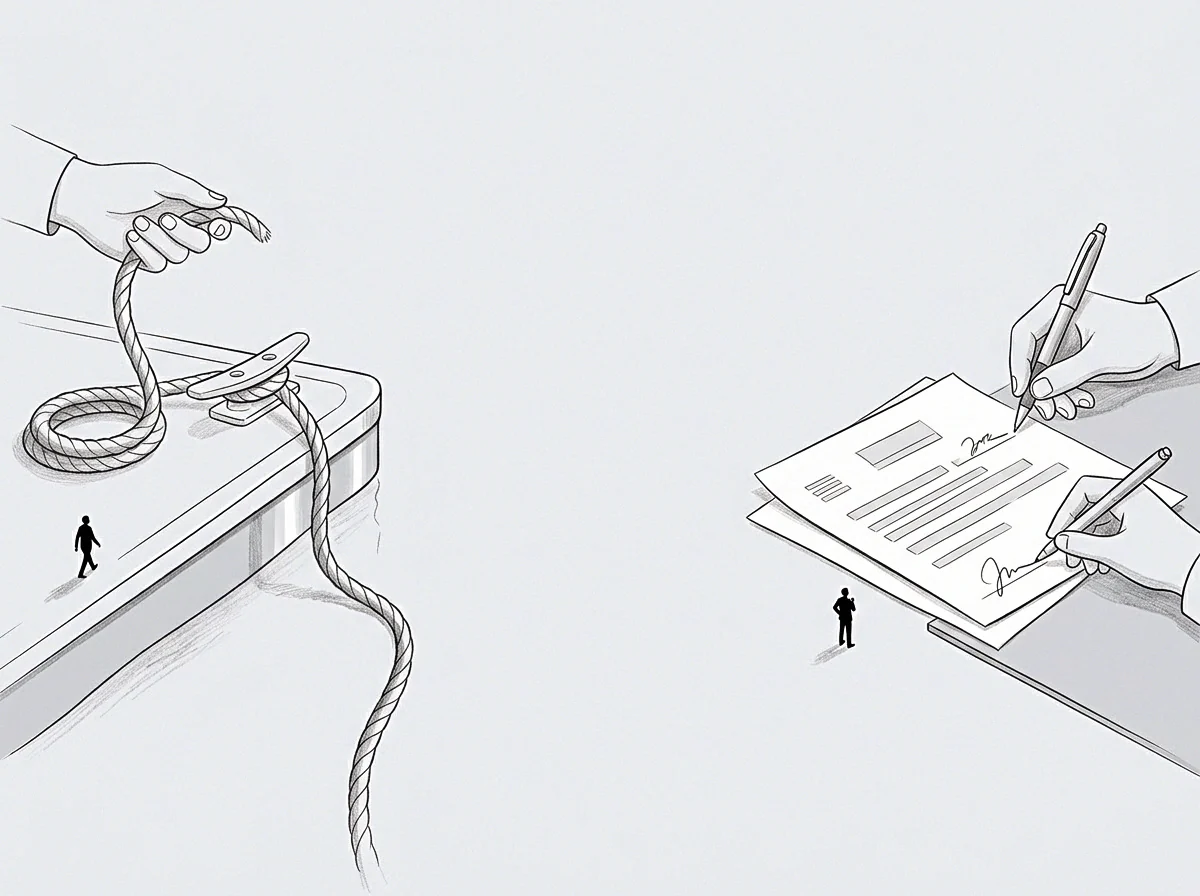
Federal copyright law assigns initial ownership of any original expression directly to the individual human author at the moment of creation. Section 204(a) of the Copyright Act specifies that a transfer of copyright ownership is invalid unless an instrument of conveyance sits in writing and carries the signature of the owner. Partnership conduct does not execute a statutory copyright transfer.
The authoring partner holds absolute title to the code base while the general partnership owns the operational business assets. The software code remains separate.
An unwritten agreement to share future profits leaves title to authored expression with the individual creator.
The operational divide deepens as the business secures its first paying clients. The non-technical partner acts on the belief that all work product belongs to the shared entity. That partner spends six months selling software subscriptions based on a projected future of equal ownership.
The technical partner writes code under the assumption that ownership transfers only when legal incorporation occurs. Neither stance carries a record. The physical artifacts of the business, including server logs, repositories, and notes, reveal two distinct property holdings existing inside one business operation.
The default general partnership owns the trade name and goodwill, while the developer owns the software engine.

The Friction Between Conduct and Copyright Law
Under state partnership statutes, property acquired with partnership funds belongs to the enterprise. When a partner uses personal laptops, uncompensated evening hours, and pre-existing code libraries, the statutory presumption of partnership property breaks down. The absence of direct financial reimbursement from a dedicated business account keeps the economic burden on the individual author.
Copyright ownership does not shift through mere contribution to a joint effort unless the work meets the statutory definition of a joint work. Joint work status demands mutual intent at the time of creation that the parts be merged into an inseparable whole. Proof of that intent requires unambiguous evidentiary support when disputed.
The partner handling sales continues to operate on a promise spoken in a room. The software author continues to push code to a personal repository account. The enterprise expands, yet its core asset sits on an ungrounded foundation.
The sales partner assumes that labor equates to equity acquisition in the underlying source code. The developer assumes that holding the administrative key to the repository preserves absolute ownership until a valuation is set. The other party eventually claims that every line of code was written for the shared business and belongs equally to both founders.

Burden

Evidentiary Deficits in Unwritten Assets
When a default general partnership collapses, the evidentiary burden of proving an intellectual property contribution rests on the party asserting that the asset belongs to the firm. Courts examining unwritten arrangements separate economic claims into three categories: explicit capital contributions, partnership property acquired through conduct, and personal property licensed to the firm. The legal presumption starts with the individual creator holding title.
The general partnership must establish clear evidence of intent to transfer ownership to the collective entity. Silence creates an implied license.
Oral statements made during early product design carry minimal evidentiary weight against federal statutory standards. A statement recorded in a text message expressing a desire to build a company together does not satisfy the written assignment mandate of patent or copyright law. Patent ownership under Title 35 of the United States Code similarly presumes initial ownership rests with individual inventors.
Without a signed written assignment, an unwritten patent contribution remains the personal property of the inventing partner. The partnership possesses at most a shop right or an implied license to use the invention during the operational lifespan of the firm.
Oral promises hold no statutory weight against federal writing requirements for proprietary transfers.
The party asserting that unwritten intellectual property became partnership capital faces an evidentiary barrier. The court scrutinizes several operational factors to test whether an unwritten assignment occurred through equitable doctrine:
- Financial compensation records indicating whether the author received direct payment, market-rate fees, or partnership draws explicitly designated as consideration for the proprietary asset.
- Tax return filings demonstrating whether the asset was listed as an asset contributed to the partnership capital account on Form 1065 Schedule K-1 allocations.
- Third-party representations including pitch decks, bank credit applications, or client contracts where both partners explicitly declared entity ownership of the property.
- System access controls showing whether repository permissions, administrative credentials, and master keys were held exclusively by the individual author or controlled by the enterprise.

The Economic Cost of Deferred Written Terms
Delaying explicit intellectual property documentation exposes the business to structural fragility. The non-technical operator invests months of labor, personal capital, and relationship equity into promoting software that the enterprise does not own. The software author invests technical capacity into an entity that can be dissolved by either partner at will under default Uniform Partnership Act provisions.
Dissolution triggers a liquidation of partnership assets, but the non-exclusive implied license owned by the partnership may terminate upon final winding up. The entity loses its right to operate the software engine.
Rebuilding software from scratch after dissolution requires significant financial expenditure and delays enterprise momentum. The technical partner who retains individual title can launch a parallel business using the exact code base without breaching duties, provided trade secrets are not misappropriated. The non-technical partner receives an equal split of bank balances and physical assets but retains zero rights to the proprietary technology that generated the client interest.
Failing to secure signed assignment documentation early leaves the non-authoring partner with the complete financial loss of their invested labor.
Asset

Statutory Defaults Against Implied Entity Ownership
Default partnership law treats all property brought into the partnership or subsequently acquired on its account as partnership property. Section 204 of the Revised Uniform Partnership Act sets explicit rules for determining when property belongs to the enterprise. Property purchased with partnership assets carries a presumption of partnership ownership.
Property acquired in the name of an individual partner without partnership funds and without documentation indicating their capacity as a partner remains individual property. The statutory presumption favors the individual author when external capital was not used to produce the work.
The friction between partnership asset absorption and federal intellectual property preemption creates distinct ownership profiles across common enterprise assets. Federal statutory requirements override state-level partnership presumptions whenever title transfer is contested.
| Asset Type | Federal Statutory Default | RUPA Default Rule | Equitable Remedy Outcome |
|---|---|---|---|
| Source Code and Software | Individual author retains copyright title absent signed assignment. | Presumed individual property if developed on personal equipment. | Implied non-exclusive license granted to partnership for operations. |
| Patentable Inventions | Inventors retain full patent ownership rights as individuals. | Individual asset unless developed using explicit firm funds. | Shop right allowing non-exclusive entity use without royalties. |
| Customer Databases | Unprotected by copyright; trade secret protection applies. | Partnership asset if compiled during joint business hours. | Joint ownership of customer lists upon partnership dissolution. |
| Brand Marks and Logos | Common law trademark vests in the user in commerce. | Partnership asset once used publicly to identify business. | Entity retains trademark; individual author retains graphic copyright. |

Does Default Partnership Law Automatically Absorb Preexisting Intellectual Property?
Preexisting intellectual property brought into a default general partnership by one partner never automatically converts into partnership capital. The statutory framework requires an explicit valuation, an agreed capital account credit, and a written conveyance to shift ownership from the individual to the business entity. When a founder brings a pre-built software tool or proprietary algorithm into a new enterprise, the law treats the asset as loaned or licensed to the firm unless documentation proves a transfer.
The default presumption protects the original creator from inadvertent forfeiture of assets created prior to the joint venture.
The entity receives an implied non-exclusive license to use the preexisting asset to the extent required to execute the partnership business. This implied license is generally non-transferable and non-assignable without the express consent of the authoring partner. If an outside investor or acquirer inspects the business, the absence of an explicit written assignment creates a defect in the chain of title.
Capital contributions demand explicit documentation.
Silence regarding asset ownership leaves the enterprise with an unassignable implied license.
Equitable principles like quantum meruit and constructive trusts can alter standard financial distribution during litigation, but they rarely alter legal title to intellectual property. A court may order a technical partner who retains individual copyright title to compensate the non-technical partner for the value added to the asset through sales and market validation efforts. This financial adjustment occurs as an accounting payout during dissolution rather than a transfer of the underlying copyright.
A clear assignment contract signed at inception completely replaces the unpredictable application of equitable litigation remedies.
Room

The Seat of Creation and Co-Working Realities
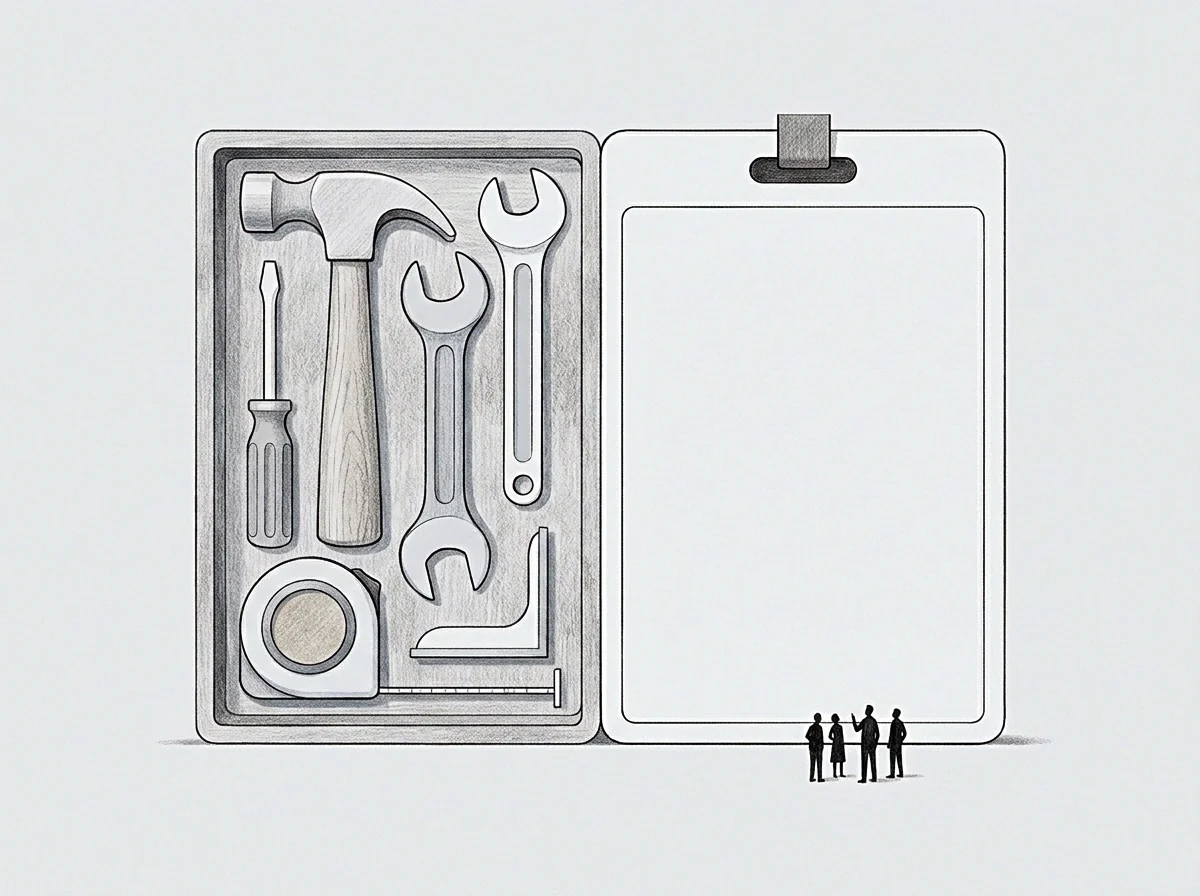
Informal partnerships often grow inside shared physical rooms or joint digital workspaces. Two founders sit in the same room for ten hours a day, iterating on workflow designs, business strategies, and user interface features. The physical proximity breeds a false sense of joint creation.
The sales operator suggests adding a specific dashboard feature, while the developer writes the specific lines of code that execute the feature. The law does not recognize conceptual suggestions as copyrightable expression. Ideas, concepts, and operational feedback remain free for public use under Section 102(b) of the Copyright Act.
The copyright protects only the fixed, tangible expression authored by the developer.
The creator owns the copyright. The distinction between conceptual contribution and tangible expression causes immense personal and legal friction during business breakups. The non-technical co-builder believes their strategic input earned them joint ownership of the resulting tool.
The technical builder recognizes that legal title attaches solely to the author of the code. The room forgets the conversations, but statutory law enforces the written code.
Conceptual suggestions provided during collaborative sessions create zero ownership rights in fixed copyrightable expression.
To avoid severe structural breakdown when an unwritten arrangement splits, partners execute retroactive confirmatory assignments. These legal instruments document the original intent of the parties and formally convey individual intellectual property into the business entity. An effective assignment package requires specific foundational elements:
- Explicit IP Conveyance Clause granting all right, title, and interest in specified software, code, designs, and documentation to the corporate entity.
- Waiver of Moral Rights preventing the individual creator from restricting future modifications, updates, or derivatives of the authored work product.
- Prior Inventions Disclosure Annex detailing all pre-existing code or tools owned by the author that are excluded from the transfer or licensed separately.
- Retroactive Effective Date Provision aligning the legal assignment date with the initial day collaborative development work began.
Quantum Meruit Claims and Contribution Accounting
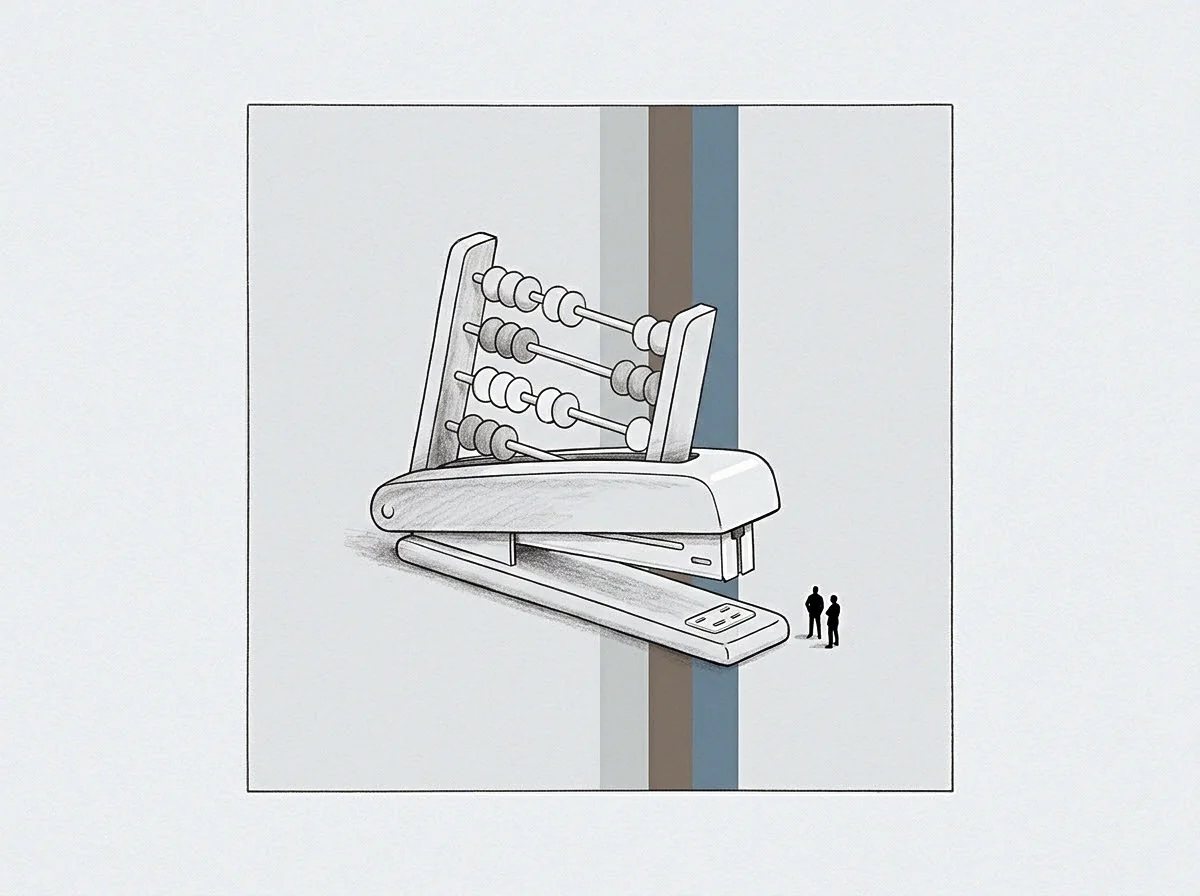
When an unwritten partnership dissolves without a written IP assignment, the non-authoring partner frequently pursues a claim for quantum meruit recovery. Quantum meruit provides an equitable remedy for the fair market value of services rendered to prevent unjust enrichment of the partner retaining the intellectual property. If the technical founder keeps the software base and launches a successful solo company, the sales partner argues that their unpaid labor validated the product and created its market value.
Calculating the value of unwritten contributions requires objective financial measurement. Courts look at standard market rates for sales development, marketing execution, and administrative leadership during the partnership period. The non-technical founder receives an equitable monetary judgment reflecting the value of their labor, offset by any partnership distributions already received.
The software asset remains the absolute property of the authoring partner. The paper determines the title.

Title
Formalizing Unassigned Assets Before Institutional Milestones
Institutional investors, venture capital funds, and prospective enterprise buyers conduct rigorous legal due diligence before injecting capital into a business. The first structural vulnerability identified in an informal partnership is the lack of written intellectual property assignment agreements. An unassigned software core or unassigned patent application prevents institutional funding entirely.
Investors refuse to purchase shares in a company that holds only an implied non-exclusive license to its core technology. The record replaces memory.
Remediating title defects requires negotiating buyouts or executing retroactive assignments with all past and present contributors. If a former partner left the enterprise on bad terms two years prior, that individual retains leverage over the business. The departure of an uncompensated contributor who never signed an assignment agreement leaves a perpetual cloud on the title of the enterprise assets.
The business must allocate significant equity or cash reserves to purchase a formal assignment from the departed partner.
Unwritten terms generate immediate vulnerability. The remaining founders face the choice of paying an exorbitant sum for a confirmatory bill of sale or spending extensive resources rebuilding the proprietary asset from scratch. The unassigned work stays with author.
The statutory framework rewards those who record their transactions in writing while penalizing those who rely on verbal promises and shared operational effort.
The enterprise faces a final operational challenge when former partners dispute the boundary between individual knowledge and transferable enterprise property. Does an unwritten implied license survive the conversion of a general partnership into a formal limited liability company or corporation, or does the statutory transformation extinguish the license and require a fresh grant from the original author?