
Resolving Disputed Intellectual Property Ownership Following Informal Partnership Dissolution Without Written Asset Assignments
Copyright and patent rights remain with individual creators absent signed written transfers, while partnership equity claims require formal accounting.

Ground
Two developers launch a software product after eight months of informal night meetings, shared repository access, and verbal commitments to split the entity equally upon incorporation. One partner writes every line of application code, configures the build pipeline, and deploys the production database. The second partner defines product requirements, designs marketing material, speaks with potential clients, and funds server hosting costs from a personal bank account.
When revenue arrives and disagreement over strategic direction stalls formal entity formation, the developer changes the repository password and asserts sole ownership of the codebase. The business partner asserts that equal partnership status confers equal ownership of every digital asset built during the collaboration.
Statutory intellectual property law operates independently of partnership expectations. Federal copyright law dictates that copyright ownership vests instantly in the author who fixes an original work in a tangible medium of expression. Title to written software code belongs to the individual programmer who typed the syntax, unless the creation occurs within the scope of formal employment or under a signed written agreement transferring rights.
Verbal promises of equal equity, shared administrative credentials, and joint contribution to business concepts create zero transfer of legal title under statutory copyright standards.
The absence of a signed written assignment locks copyright title to the physical creator regardless of capital contributed or business role.
General partnership rules under state law add a parallel layer of ownership obligations. When two individuals conduct business together for profit without formal corporate filings, state statutes classify the enterprise as an informal general partnership. Property acquired with partnership funds or brought into the shared enterprise for its operations can be classified as partnership property under equitable principles.
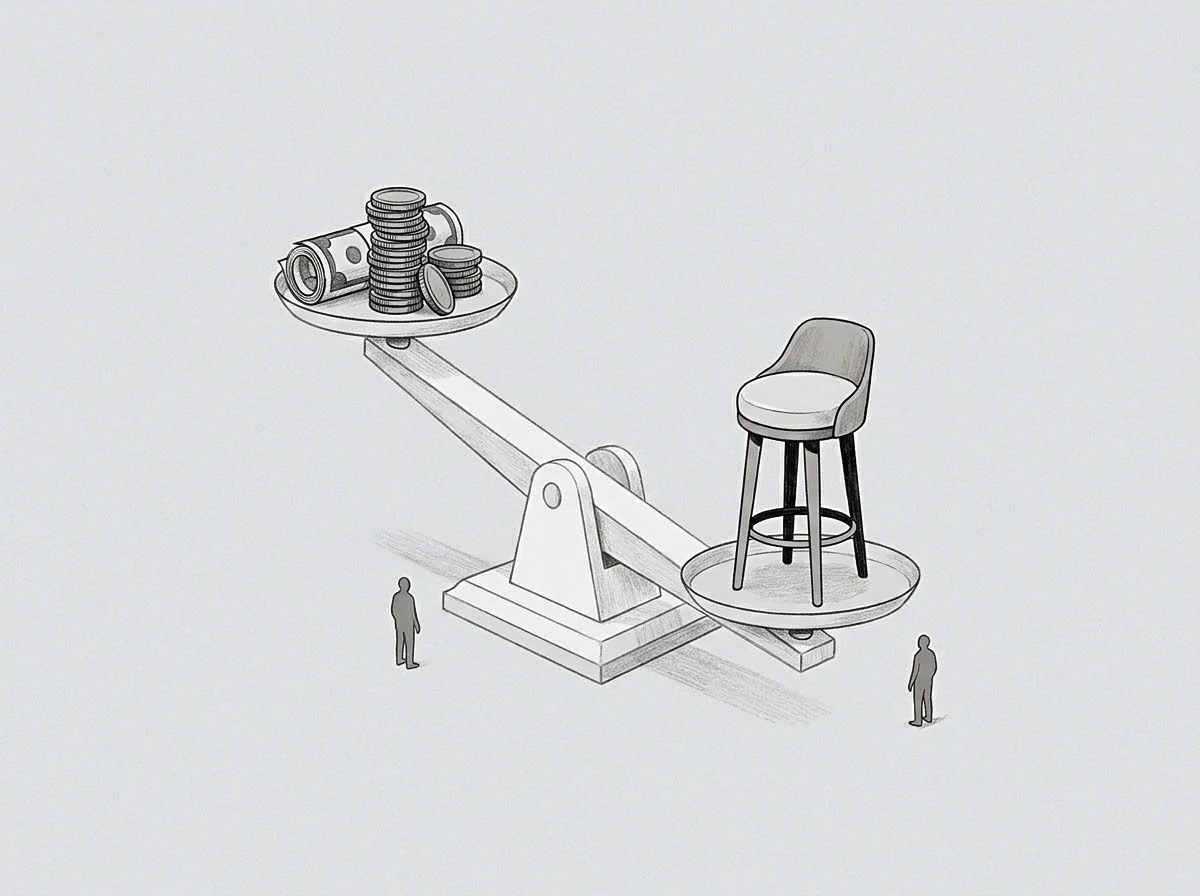
This tension produces a legal divide: the individual developer retains legal title to the copyright under federal statute, while the informal partnership holds an equitable claim to the economic value of that asset.
Federal law enforces strict formalities regarding copyright transfers to ensure certainty in commercial commerce. Under Section 204 of the United States Copyright Act, any assignment of exclusive copyright rights must occur through an instrument signed by the owner. Oral statements made during informal meetings possess zero legal validity for transferring exclusive rights.
A non-technical founder who relies on verbal assurances of shared ownership possesses no statutory title to the application code.
Operating an informal collaboration on unwritten promises leaves legal title stranded with the individual creators while encumbering the asset with equitable partnership claims that prevent commercial exploitation by either party.
Proof
Proving legal title to software, inventions, and brand elements requires examining the physical records generated during creation. Courts evaluate evidence of authorship, invention, and trademark usage through distinct evidentiary standards rather than relying on recollections of initial intent.

What Determines Work Product Ownership Without Assignments?
Documenting who authored a work demands granular evidence from development systems. Software code repositories maintain timestamped logs showing which contributor authored each line of code. Version control history provides primary evidence of statutory copyright title.
- Git Commit History records the precise cryptographic author signature, timestamp, and source lines added by each contributor to establish individual copyright boundaries.
- Server Hosting Receipts document individual financial payments for infrastructure but fail to transfer statutory title of the hosted application software.
- Wireframe Diagrams establish copyright title over visual layouts for the graphic designer without extending ownership to the underlying software implementation.
- Client Communications demonstrate commercial intent and business partnership context useful for establishing an equitable partnership lien.
Joint authorship under copyright law requires a higher evidentiary threshold than simple collaboration. A partner claiming joint authorship must demonstrate that both parties intended to merge their contributions into an interdependent whole at the time of creation. Further, each party’s contribution must independently constitute copyrightable expression.
Suggestions, ideas, feature specifications, and feedback fail to meet the threshold of copyrightable expression. A business contributor who provides conceptual guidance creates zero joint copyright interest in the written code.
Joint copyright title demands independently copyrightable expression from every claimant at the moment of creation.
Patent rights follow distinct evidentiary rules regarding inventorship. Patent inventorship belongs to individuals who contribute to the mental conception of a claimed invention defined in a patent claim. Contributing financial backing or general goals does not confer inventorship status.
Joint patent ownership grants each co-inventor the statutory right to practice or license the invention without accounting for royalties to other joint owners, creating an outcome opposing that of joint copyright ownership.
The code belongs to the person who wrote it because no contract assigned it away.

Split
Partitioning intellectual assets after an informal partnership dissolves requires separating legal ownership from implied commercial licenses. Dissolution terminates the implied authority of individual partners to bind the collective business, forcing a structural accounting of shared assets.

Implied Nonexclusive License Scope
Creation of software for an enterprise creates an implied nonexclusive license even when legal title remains with an individual author. When a creator delivers code to a shared business venture with the intent that the venture deploy the software, courts infer a nonexclusive license. This implied license permits the business to continue using the software for its intended operational scope.
An implied nonexclusive license requires no written signature under Section 204 because exclusive title is not transferred.
The boundary of an implied nonexclusive license depends on the parties’ conduct prior to dissolution. The nonexclusive license allows ongoing operations of existing business lines but excludes the right to sublicense, transfer, or sell the software code to third parties. The individual author cannot revoke an implied nonexclusive license if the enterprise provided consideration, such as paying server bills or funding development expenses.
- Auditing repository commit histories and design files to isolate individual contributions from shared contributions.
- Determining whether enterprise expenditures created an irrevocable implied nonexclusive license for ongoing business operations.
- Calculating partnership financial contributions to establish equitable lien offsets against statutory title holders.
- Negotiating a formal separation agreement establishing clear asset ownership or executing quitclaim assignments.
Implied licenses protect basic business continuity but forbid exclusive licensing and asset transfers to third parties.
Informal partnerships that generate brand names establish common law trademark rights through continuous commercial use. Trademark ownership belongs to the entity that controls the nature and quality of the goods or services offered under the mark. Unlike copyright title, common law trademark rights generated during partnership operations typically belong to the general partnership as a unified asset rather than to the individual partner who designed the logo.
Executing a written settlement agreement specifying exclusive asset assignments and covenanting not to sue converts ambiguous equitable claims into enforceable legal titles.

Cost
Uncertainty regarding intellectual property title imposes severe financial and operational discounts on a enterprise asset. Investors, acquirers, and institutional clients demand unencumbered chain of title before executing transactions. Unresolved partnership claims create severe title clouds that paralyze commercialization.
| IP Category | Statutory Ownership Rule | Writing Required for Transfer | Joint Owner Default Rights |
|---|---|---|---|
| Copyright | Individual author upon fixation | Yes, signed writing under Section 204 | Must account to co-owners for profits |
| Patent | Individual inventors of claims | Yes, written assignment for recording | Can license independently without accounting |
| Trademark | Entity controlling quality in commerce | Recommended, written assignment of goodwill | Equal rights under general partnership principles |
| Trade Secrets | Possessor maintaining secrecy | Yes, non-disclosure and assignment terms | Divided upon partnership dissolution accounting |
Valuing encumbered assets following informal dissolution requires accounting for litigation risk and cloud on title. A software enterprise with clean title might command a market multiple based on revenue metrics. The exact same software codebase lacking signed written assignments from all early contributors incurs a valuation penalty exceeding fifty percent.
Strategic buyers routinely reject transactions where a former informal partner retains equitable claims or statutory copyright title.
Fiduciary duties under general partnership law survive the initial breakdown of personal relations. Partners owe each other duties of loyalty and accounting during the winding-up phase of an informal enterprise. A partner who secretly registers a trademark or copyright created by the partnership in a personal name violates fiduciary obligations, subjecting the registration to a judicial constructive trust.
Dissolution of an informal enterprise forces an equitable financial accounting where profits generated from shared assets must be offset against individual capital expenditures and unpaid labor contributions.
Unassigned assets lose market value faster than contested physical property.

Record
Resolving ownership disputes after informal partnership dissolution requires reconstructing the historical record of contributions, funding, and agreements. Establishing clean legal title after the fact demands formal legal instruments that supersede historical ambiguities.
Quitclaim assignments serve as the standard mechanism for clearing title clouds on contested assets. A quitclaim IP assignment transfers whatever right, title, and interest a former partner holds in specified copyrights, patents, or trademarks to the surviving business entity without asserting warranty of title. This instrument extinguishes both statutory claims and equitable partnership liens, creating clear documentation for future institutional verification.
Retroactive assignment agreements require explicit legal consideration to remain enforceable. Presenting a former partner with a standardized Proprietary Information and Inventions Agreement years after work completion fails without new financial value exchanged. Legal consideration can take the form of direct monetary settlement payments, equity buyouts, or ongoing royalty structures tied to future commercialization milestones.
Retroactive assignment agreements signed after asset creation fail without fresh financial consideration paid to the author.
Judicial partition actions remain the ultimate recourse when former partners refuse voluntary resolution. Courts presiding over partnership dissolution proceedings possess equitable authority to order public sales of intellectual assets, divide proceeds according to partner capital accounts, or grant exclusive rights to one party subject to a cash equalization payment. Judicial sales clear clouds on title by court decree, though public auctions typically realize a fraction of an asset’s potential commercial value.
Documenting explicit asset assignments at the inception of a collaborative project prevents statutory ownership defaults from overriding business intent. The historical record preserved in version control systems, financial ledgers, and formal assignment deeds forms the sole foundation for establishing clear ownership when collaboration ends.