
Audio Recordings Against Written Terms in Shareholder Splits
Audio recordings rarely override signed shareholder agreements because merger clauses extinguish prior oral statements.

Sound
Two founders sit at a conference table while a cellular phone plays a digitally recorded meeting from twenty-four months prior. The captured voice of the departing partner insists that forty percent of the common stock was pledged during early product design. The executed operating agreement on the table records twenty percent.
The physical artifact of the voice meets the physical artifact of the signed contract.

Oral Commitments Against Written Integration
In commercial disputes, recorded discussions frequently conflict with executed documents. Founders often negotiate equity distribution over casual meetings, phone conversations, and informal strategy sessions. Digital voice recorders and phone applications preserve these exchanges in clear detail.
A partner holding such an audio file often views it as conclusive proof of a binding arrangement. Adjudicators evaluate claims through formal rules of contract law.
Audio files capture voice. A recording proves that specific words were spoken on a specific date. It does not prove that those words constituted a legally binding contract.
Conversational bargaining involves proposals, tentative offers, and hypothetical scenarios that precede a final bargain. Legal clarity protects value.
An audio recording captures spoken statements in a room, while a signed shareholder agreement records legally executed terms.

The Parol Evidence Threshold
Under established legal doctrines, verbal statements made prior to contract signing stay excluded from modifying signed terms. The parol evidence doctrine protects negotiated contracts against subsequent claims based on fluid memory or preliminary bargaining. Audio recordings fall squarely into the category of extrinsic material.
When a shareholder agreement contains complete language defining share allocation, an arbitrator refuses to review informal voice files to alter explicit numbers. Extrinsic evidence faces limits.
Verbal terms expire. When parties reduce their agreement to a formal writing intended as a final expression, prior oral promises lose legal force. The existence of a recorded conversation does not bypass this rule.
Unless the written contract is proven to be ambiguous or tainted by fraud, the signed paper governs the dispute.

Unilateral Recording and Statutory Admissibility
Surreptitious capture of spoken conversations introduces distinct legal hurdles before an adjudicator ever evaluates context. Wiretapping statutory schemes in many jurisdictions mandate that all participating parties consent to an audio capture. In all-party consent states, a secret digital audio file constitutes an illegal interception of communications.
Legal venues exclude such files from civil proceedings entirely.
Unilateral recordings carry statutory risks. Even in one-party consent jurisdictions where secret recordings are lawful, the evidentiary weight remains subordinate to signed written modifications. The party introducing a secret audio file faces evidentiary objections regarding authentic chain of custody, potential audio editing, and missing contextual conversation.
The audio file proves the original bargain before lawyers changed the text.

Desk
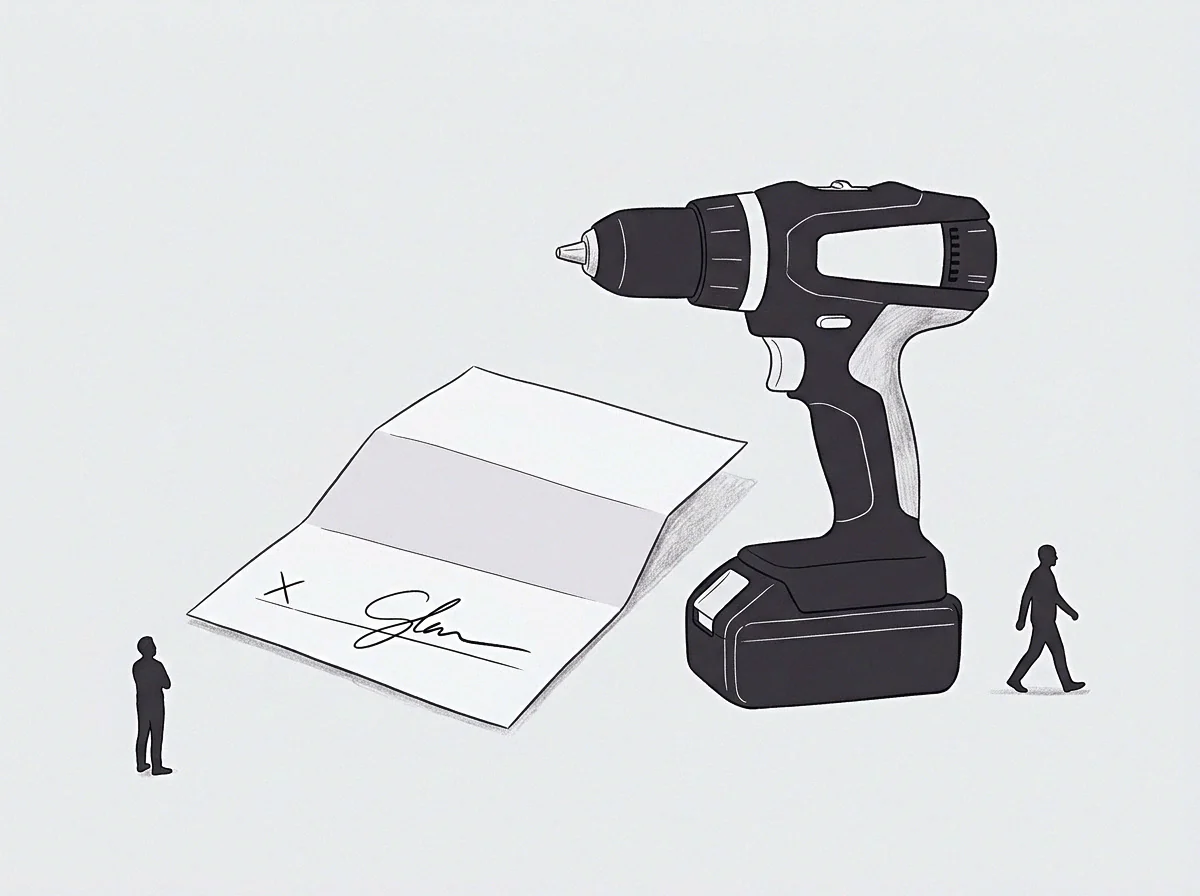
The physical execution of corporate documents establishes the boundaries of shareholder rights. When paper agreements sit signed inside corporate files, they replace earlier verbal exchanges. Paper records survive.

Complete Integration and Merger Clauses
Standard shareholder agreements include an entire agreement provision stating that the document constitutes the full understanding between parties. This provision explicitly extinguishes prior oral representations, recorded conversations, informal emails, and preliminary draft agreements. The presence of a merger clause signals to an adjudicator that the parties intended the written contract as the definitive expression of their terms.
Merger clauses extinguish oral promises. A founder who agrees to an integrated shareholder contract containing a merger clause effectively waives the right to enforce earlier verbal promises captured on tape. The signed contract constitutes the sole enforceable record of shareholder equity.
An explicit integration clause in a shareholder agreement extinguishes prior oral promises made during recorded conversations.
| Evidentiary Artifact | Legal Standing | Susceptibility to Reconstructive Drift | Operational Cost to Maintain |
|---|---|---|---|
| Unilateral Audio Recording | Extrinsic evidence; frequently excluded by merger clauses or consent statutes. | Low raw artifact drift; high context and intent interpretation drift. | Low initial creation cost; extreme litigation expense in admissibility disputes. |
| Signed Operating Agreement | Primary binding contract under statutory business corporation laws. | Zero drift; text remains unalterable without formal written amendment. | Moderate legal preparation fee paid once at execution. |
| Contemporaneous Email Summary | Secondary evidence; admissible to clarify genuine contractual ambiguities. | Moderate drift depending on explicit response and acknowledgment. | Negligible administrative effort during routine operations. |
| Cap Table Certificate | Direct evidence of corporate equity issuance and shareholder registration. | Zero drift once recorded in corporate minutes and filed. | Low ongoing corporate secretarial maintenance. |

Objective Contract Theory and Written Terms
Arbitrators apply an external standard when interpreting equity splits. Legal venues inspect the plain meaning of executed words without attempting to discern subjective intentions captured in casual dialogue. Signed paper outlasts memory.
A recorded remark expressing willingness to grant future equity does not constitute a legal issuance without formal board resolutions and written stock certificates.
The objective text remains. Clear signatures bind. Courts preserve commercial stability by holding equity holders to the plain language of their executed documents rather than fluid conversational exchanges.
An express integration clause within a shareholder contract voids all prior audio recordings regarding equity allocation.

Drift
Human memory undergoes continuous reconstruction following verbal agreements. Speakers routinely remember conversations in ways that align with personal expectations and emerging financial interests. Casual discussions drift.

Cognitive Divergence in Spoken Bargaining
Research on recollection shows that individuals report high subjective confidence in misremembered verbal commitments. Memory shifts over time. When co-founders discuss split calculations across unstructured meetings, each participant filters spoken statements through personal framing.
An audio recording reveals exact phrasing, yet it frequently exposes how incomplete casual dialogue is regarding vesting schedules, forfeiture conditions, and valuation formulas. Spoken words lack precision.
The distance between spoken intent and written execution creates structural friction during a split. A founder may listen to a recording and hear a firm pledge of equity, while a partner listens to the same audio and hears preliminary brainstorming. The recording preserves the acoustics while leaving the underlying legal commitment open to dispute.

What Operates When Spoken Promises Conflict With Written Agreements?
When unwritten understandings collide with signed documentation, legal mechanisms prioritize formal execution over conversational intent. Arbitrators recognize that bargaining is fluid, whereas contracts represent finalized compromises. A founder who relies on a recorded promise of equity without securing a written amendment remains exposed to statutory enforcement of the signed cap table.
Equity claims demand documentation. The legal apparatus treats an executed agreement as a deliberate act that supersedes earlier conversational statements. Audio recordings cannot override signed share allocations absent proof of fraud or unconscionable conduct.
Spoken conversation explores potential arrangements while written terms lock enforceable obligations.

Contextual Ambiguity and Contractual Incompleteness
Conversational language inherently lacks the definitive mechanics required for corporate governance. A statement captured on audio such as agreeing to share future upside fails to define whether that split applies to common stock, stock options, or net distributions upon liquidation. Legal bodies decline to enforce incomplete agreements that omit material parameters.
A contract requires definite terms regarding quantity, price, and performance timing. Audio recordings of founder meetings almost universally lack these technical specifications. The recorded voice records optimism; the written contract records enforceable rights.
Relying on recorded spoken promises without formal contractual amendments results in costly legal disputes and unenforceable equity claims.

Audit
Evaluating evidentiary material during a co-founder departure requires systematic review of all documentation and recording conditions. Arbitrators inspect dates.
- Unintegrated Verbal Commitments generate persistent ambiguity regarding equity vesting timetables when corporate documents remain unamended.
- Statutory Interception Violations invalidate surreptitiously recorded dialogue in jurisdictions that mandate multi-party consent.
- Incomplete Performance Terms render spoken promises unenforceable due to missing valuation models and transfer restrictions.
- Subsequent Execution Dates establish that signed shareholder contracts override all prior audio files regardless of recorded conversational tone.
Evidentiary Weight in Equity Buyouts
Arbitrators analyze the sequence of dates when evaluating conflicting claims. Dated documents preserve intent. A recorded conversation occurring before the execution of a shareholder agreement carries no legal force against clear text inside the integrated agreement.
If an audio file is recorded after contract execution, it modifies the contract only when meeting formal statutory standards for written amendments.
Corporate bylaws typically mandate that any contract modification must occur in writing signed by authorized officers. An informal audio recording fails to satisfy this structural requirement. Spoken words stay legally ineffective against explicit amendment rules.
Contemporaneous written records signed by all equity holders supersede prior audio recordings whenever contract terms remain unambiguous.
- Review executed shareholder contracts for comprehensive merger provisions and oral modification prohibitions.
- Verify whether recorded conversations occurred before or after the formal contract execution date.
- Determine local statutory consent requirements regarding unilateral digital audio recordings.
- Examine corporate board minutes to confirm whether any verbal proposal received formal ratification.

Adjudication Standards for Ambiguous Terms
Only when a written shareholder agreement contains genuine, irreconcilable textual contradiction will a tribunal permit extrinsic audio recordings to assist in interpretation. In such narrow circumstances, the audio file serves strictly to clarify the meaning of ambiguous contract words, never to add new equity obligations or contradict established figures.
Legal construction favors interpreting written terms against the party seeking to introduce informal extrinsic files. When written terms are clear, the tribunal closes the record to outside audio.
A signed document executed after a conversation always governs over an audio recording made during that conversation.

Draft
Preventing co-founder splits from dissolving into evidentiary disputes requires clear documentation habits. Formal equity splits require signatures.

Securing Corporate Records Against Oral Claims
Co-founders safeguard their equity structures by establishing clear governance procedures early in company formation. Every modification to share capital, vesting terms, or founder departure terms ought to be executed through formal board resolutions and signed amendments. Written agreements define equity.
Leaving equity arrangements in spoken form creates legal exposure for the enterprise and all participating partners.
When terms change during operations, immediate written integration prevents later historical disputes. A short written amendment signed by all shareholders takes fifteen minutes to execute. Resolving a dispute over a recorded phone call takes months of tribunal proceedings.

The Supremacy of Written Integration
The legal system prioritizes written agreements precisely because they represent deliberate, finalized commitments. Audio files capture preliminary bargaining, informal speculation, and fluid negotiations that precede formal execution. The signed contract governs.
When shareholder disputes arise, legal venues rely on executed agreements to maintain commercial predictability and enforce negotiated terms. The physical record on paper survives memory drift, recorded tone, and unwritten expectations.
The question remains how emerging digital transcript tools will influence evidentiary arguments when informal founder recordings interact with unexecuted equity promises.