
Grounding Clock Synchronization Failures In High Frequency Settlement
Clock drift corrupts matching engine sequence records, turning clear trade executions into contested liabilities across clearing houses.

Pulse
Trading desks track arrival times down to fractional billionths of a second. Inside a co-location cage, matching engines mounted in identical chassis process quotes within two hundred nanoseconds. When executions cross distinct venues, settlement relies on verifiable sequence.
A fill logged at one matching engine must precede a cancel instruction timestamped at another venue fifty nanoseconds later. If the reference oscillators between those venues drift by eighty nanoseconds, that sequence flips: the cancel registers before the execution it was supposed to void, leaving clearing systems with an impossible transaction order.
Timing telemetry forms the definitive evidentiary record across electronic venues.
Automated markets pull their external time base from rooftop receivers tracking atomic clocks maintained by sovereign standards bodies, distributing the feed over coaxial cabling and precision time protocol networks to field-programmable gate arrays on host bus adapters. The receiver provides a one-pulse-per-second strobe alongside high-frequency time codes. That strobe marks the phase edge, while serial data supplies the year, day, hour, minute, and second.
Master clocks inside the facility translate the pulse into IEEE 1588 packet streams, which subordinate cards in each server chassis track via digital phase-locked loops to discipline their local crystal oscillators.
Under continuous phase lock, an incoming timing signal disciplines local oscillator wander within ten nanoseconds of universal coordinated time.
When an antenna cable degrades or weather attenuates incoming satellite signals, the master clock loses lock and drops into holdover. During holdover, the oscillator runs unassisted, governed entirely by its physical composition and operating temperature. Rubidium vapor cells hold stability relatively well, losing perhaps one microsecond over several days, whereas standard oven-controlled quartz crystals drift nanoseconds each second once external corrections drop out.
This drift remains invisible to the settlement pipeline during matching. The host operating system keeps stamping incoming packets from hardware counter registers, oblivious to the divergence developing between its local timestamps and an exchange sixty miles away.
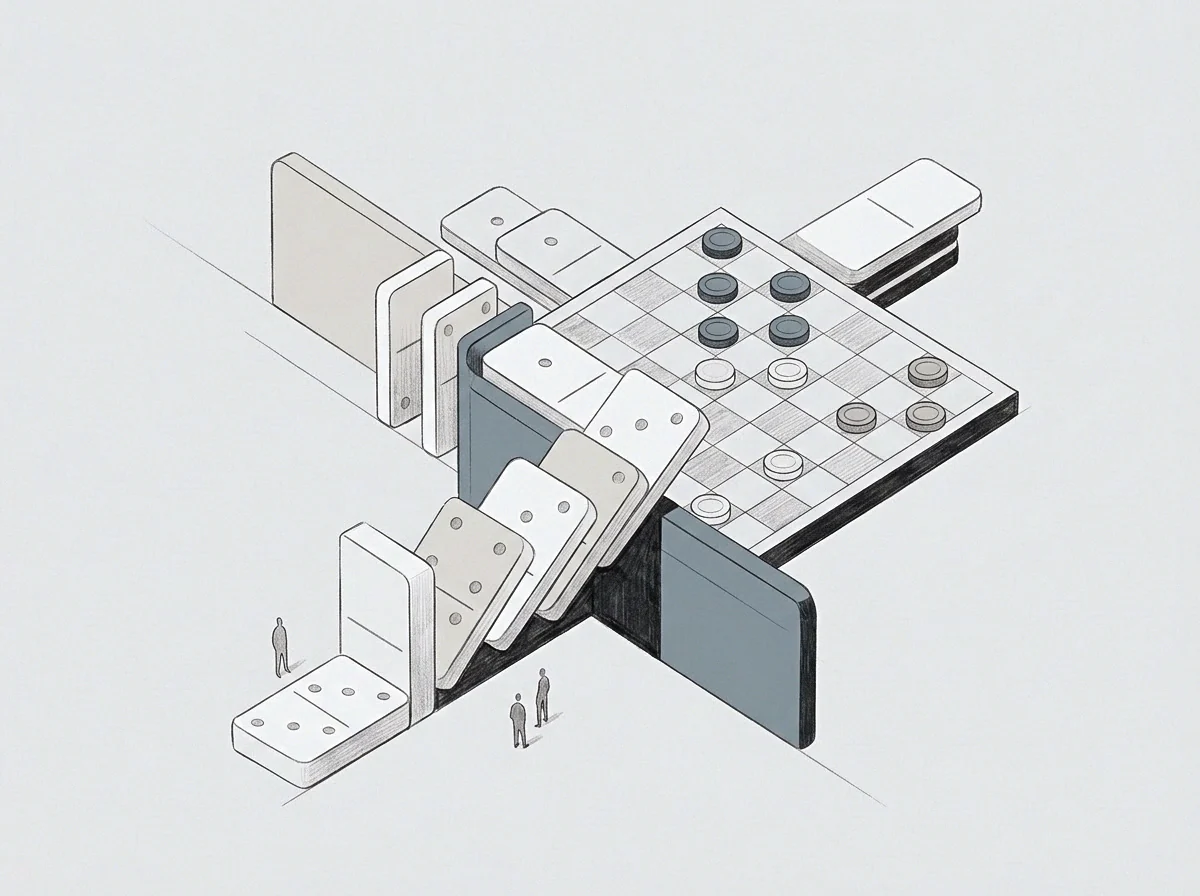
Reference Frequency Degradation And Asymmetric Reception
The gap between execution and clearing exposes these timing flaws. Post-trade systems take execution records from brokers, alternative crossing systems, and exchange engines to calculate net cash obligations and securities transfers. Regulatory frameworks such as the European Union regulatory technical standard twenty-five enforce strict tolerances: algorithmic platforms must log trade events within one-hundred-microsecond accuracy of coordinated time, while high-frequency venues must stay within one-microsecond, subject to a one-hundred-nanosecond maximum clock drift.
In practice, compliance archives often capture only what software registered rather than the physical state of the circuit.
Symmetric transmission assumptions often break down inside the facility. A one-hundred-meter coaxial run contributes roughly five hundred nanoseconds of delay. If the cable carrying the reference signal expands under heat while the return telemetry line sits in an air-conditioned riser, the master clock miscalculates total propagation delay.
The protocol relies on forward and return paths taking identical transit times. When the colder return line conducts faster than the warm forward line, the synchronization engine locks in a permanent phase offset across every host on the floor, leaving matching engines executing with mathematical precision around an invalid origin.
Regulatory technical standard twenty-five requires trading venues to calibrate their clock drift logs against national standards every twelve months, meaning an undocumented nanosecond discrepancy translates directly into a compliance breach.
Drift
Oscillator degradation happens through gradual phase accumulation rather than sudden failure. Once disciplining signals drop out, error growth is governed by the oscillator’s physical core. In an environment processing four hundred thousand trades a second, even subtle clock skew disrupts matching logic.
If an internal crossing engine matches complementary orders while its master clock slips fifteen nanoseconds per minute, fill records desynchronize from public quote feeds. A clearing firm running reconciliations twenty-four hours later faces impossible states, such as positions closing before the opening fill hits the tape, or stock liquidating against price levels that appeared only after a cancel had cleared.
Phase error accumulates continuously without generating software-level alerts.
Trading personnel fall back on recollections and reconstructed log files whenever these execution anomalies emerge in settlement. An internal execution log shows an order filled before noon, while counterparty risk records show liquidity was pulled three milliseconds earlier. If both firms generate timestamps from unsynchronized onboard crystals, neither dataset can refute the other.
Retrospective accounts assume the event order matched trading intent, but only the central counterparty timestamp can settle the sequence, provided exchange clocks held phase lock across the trading window.
A uncalibrated oscillator operating in holdover introduces timing skew that converts legitimate order precedence into disputed balance assignments.
Analyzing how timing faults travel through clearing infrastructure requires distinguishing several operational failure states:
- Antenna feed loss decouples the roof receiver from celestial reference clocks, leaving the master timing generator dependent on internal holdover circuits without notifying downstream matching hosts.
- Asymmetric packet jitter creates unequal path transit times inside local network switches, producing erroneous delay calculations in precision timing engines that shift host clocks by hundreds of nanoseconds.
- Oven heating failure destabilizes the crystal oscillator enclosure, permitting ambient temperature spikes to accelerate quartz frequency drift beyond the reach of software compensation algorithms.
- Hardware counter rollover occurs when interface card registers misinterpret fractional second intervals, writing corrupted timestamps that invert sub-microsecond trade execution order.
- Leap second misinterpretation introduces a full one-second dislocation into matching systems when software layers fail to apply scheduled adjustments simultaneously across distributed exchange gateways.
Sequence integrity collapses the moment matching engines lose temporal alignment.
Timing discrepancies between market participants compound rapidly during volatile sessions. If Broker Alpha routes four thousand futures contracts through an internal engine while Broker Beta posts offsetting cash hedges, alignment depends on both sides sharing a reference. If Alpha runs on a rubidium source keeping phase within five nanoseconds while Beta operates on a degraded feed that has drifted three hundred microseconds behind, Beta will timestamp its hedge execution before Alpha logged the triggering order.
The clearing house rejects the trade pair at end-of-day clearing due to negative latency, forcing clearing brokers to post margin capital across three operational days while engineers trace the mismatch.
Failing to detect holdover drift before execution sequence inverts drains capital directly through daily margin penalties and emergency collateral calls from the clearing house.
Rack
Physical installation details directly govern clock stability. Technicians run patch cabling through crowded conduits, stack high-draw servers inside perforated cabinets, and feed blade arrays through shared power modules. Mechanical stress on glass fiber from tight cable ties alters the silica core’s refractive index and slows optical transmission.
In redundant fiber paths, uneven bend radii can generate fifteen nanoseconds of asymmetric propagation delay, corrupting precision time protocol packets exchanged between the master clock and settlement logging nodes.
Transmission cabling itself introduces persistent, unmonitored propagation delay.
Thermal gradients across server cabinets create severe drift risks. Intake air at the bottom of a forty-two-unit cabinet may sit at eighteen degrees Celsius while top exhaust temperatures climb to forty degrees. Placing a primary timing card in slot forty and its redundant backup in slot three exposes the two quartz enclosures to distinct thermal profiles.
Quartz crystal resonance shifts with temperature, and even oven-stabilized packages drift when chassis fans throttle up to cool CPUs during the opening cross. Fan vibration adds microphonic noise to the crystal lattice, degrading phase stability right as order traffic peaks.
Cable geometry and cabinet thermals introduce physical propagation shifts that outpace software-based timestamp corrections.
Physical installation variables translate directly into measurable transaction timing discrepancies:
| Physical Medium | Propagation Delay | Thermal Sensitivity | Dispute Exposure |
|---|---|---|---|
| Single-mode optical fiber | 4.9 nanoseconds per meter | Approx. 40 picoseconds per degree per kilometer | High during regional seasonal temperature swings |
| Twinaxial direct attach copper | 4.3 nanoseconds per meter | Minimal over short patch lengths | Low, bounded to local chassis interconnects |
| Layer-two switch buffer queues | 50 to 800 nanoseconds variable | Dependent on silicon packet processing load | Extremely high during market volatility bursts |
| Oven-controlled quartz oscillator | Zero transit delay, local generation | 0.5 parts per billion across operational range | Escalates rapidly after twenty minutes of holdover |
| Rubidium atomic resonance cell | Zero transit delay, local generation | 0.05 parts per billion across operational range | Negligible over single trading day holdover |
Fiber curvature measurably alters the propagation speed of light through the glass core.
Timestamp disputes frequently come down to chassis slot placement. In one high-frequency capture configuration, two identical multi-port network cards recorded traffic from the same matching engine tap. One card sat directly over a graphics processing unit running risk models, while the other sat next to the cold-air intake fans.
Over an eight-hour trading day, that temperature difference caused the warmer card’s onboard crystal to drift seventy-two nanoseconds relative to the cooler one. When operations teams audited the capture files after an execution anomaly, matching packets showed conflicting arrival times. Resolving the issue took two hundred hours of database review before the fault was traced to chassis component layout.
The physical length of timing cables sets the fundamental limit of synchronization accuracy across a server row.

Stamp
Software systems interpret timestamps as straightforward integers. When a network adapter ingests a packet, triggers an interrupt, or writes to a circular buffer, it latches its hardware counter value directly into the packet header. Expressed in nanoseconds since the epoch, that integer serves as definitive proof of arrival during clearing.
If two firms submit orders for the remaining shares of an exchange-traded fund, the order bearing a counter value smaller by even a single increment secures the fill. The competing order receives a cancel report or an out-of-liquidity rejection.
Audit logs routinely turn on margins as narrow as forty nanoseconds.
Architecture design requires choosing between software timestamping in the operating system kernel and hardware timestamping directly on the network card. Kernel-level timestamps suffer from variable delays between one to twenty microseconds caused by context switches, CPU interrupt queues, and cache misses. Hardware timestamping bypasses host operating system jitter by stamping counter values into the Ethernet frame as physical-layer silicon serializes the electrical pulse.
That hardware timestamp reflects when the signal actually hit the transceiver, independent of thread scheduling or core load.
What Proves Sequence When Timestamps Invert?
Clearing systems depend on strict causal ordering. When internal crossing networks, clearing engines, or distributed ledgers reconcile trades across remote data centers, causality breaks invalidate records. Lamport logical clocks and vector timestamps were created specifically because independent physical clocks cannot ensure correct ordering across distributed nodes without continuous synchronization.
If exchange A in New Jersey and exchange B in Chicago clear legs of an equity swap, transmission along hollow-core fiber requires roughly three point six milliseconds. If local clock skew exceeds that transit time, an event in Chicago can appear to cause a New Jersey execution that finished before the Chicago message was sent.
Hardware clock registers record physical packet arrival without software interpretation.
An execution record follows a fixed path from physical signaling to final settlement confirmation:
- Physical pulse serialization latches the hardware clock counter inside the media access control silicon the instant the preamble crosses the transceiver.
- Descriptor ring handoff transfers the packet payload and its immutable hardware timestamp into host memory through direct memory access without operating system intervention.
- Order execution engine parses the trade payload, assigns an internal sequence number, and generates the matched execution report containing the initial capture mark.
- Clearing gateway ingestion consumes the execution message and validates that the reported execution timestamp falls within the authorized drift envelope of the master atomic clock.
- Central counterparty novation accepts the validated trade record, terminates the direct bilateral contract between brokers, and writes the permanent settlement obligation to the registry.
Uncalibrated timing skew causes later orders to register as earlier executions.
Post-trade audits reveal clear sequence anomalies when timing slips. In one documented mismatch, an execution confirmation delivered to a broker carried a timestamp twenty nanoseconds earlier than the corresponding quote update in the market data gateway. The market maker disputing the trade submitted internal software logs indicating an order fired in response to a quote update at ten past the hour.
The exchange, however, supplied hardware capture files proving the quote reached the gateway only after the matching engine had paired the order. The exchange hardware capture decided the break, leaving the broker to absorb the slippage loss.
The executing logic triggers strictly when active bids appear on the book, placing order generation prior to liquidity depletion despite conflicting external logs.
Dispute
Settlement disputes rarely originate as explicit arguments over clock physics. They appear as contested cash adjustments, unexpected margin deficits, or trade break notices from clearing houses. If a broker receives an unexpected three-million-dollar collateral call on a Tuesday morning, post-trade operations immediately combs through reconciliation breaks.
They identify four large blocks under dispute, with break notices asserting unsatisfied fill conditions: counterparty records log the quote as expired prior to execution, whereas the executing broker’s order router logs the fill three microseconds inside the validity window. Both firms hold cryptographically signed electronic records.
Failed reconciliation runs halt automated clearing workflows until engineers resolve the discrepancy.
Resolving these impasses tests the boundary between internal operational logs and third-party capture records. Subjective trade narratives have no standing before a clearing risk committee. The committee requires raw, unadjusted packet captures from optical taps at exchange boundary switches.
While a firm may argue its systems performed as intended, only verified physical timestamps decide the outcome. If an executing broker cannot establish that its capture appliances maintained traceable synchronization to coordinated time through an atomic reference, its logs are treated as unverified assertion.
Holdover stability windows degrade rapidly once external reference feeds drop.
Maintaining defensible timestamp integrity requires substantial hardware investment: optical taps, redundant atomic standards, and continuous telemetry logging. Deploying eighty thousand dollars per co-location site for rubidium frequency standards, dual-polarization satellite receivers, and real-time calibration allows a firm to verify trade sequencing conclusively. Conversely, relying on standard network time protocol daemons over stock Linux kernels lowers upfront capital expenditure, but risks hundreds of thousands of dollars in an afternoon when a broken sequence leaves an unhedged position exposed during a market selloff.
Audit outcomes depend entirely on which timestamps withstand forensic verification.
When clearing houses conduct forensic audits on multi-broker trade breaks, the burden falls on the party reporting an inverted sequence. Auditors evaluate disputed logs against independent capture feeds maintained by market regulators. If timestamps in a broker’s execution file diverge by more than five microseconds from the exchange master record, the broker’s submission is discarded.
The disputed transactions are settled using the exchange sequence, requiring the broker to cover the cash differential between the original execution and the prevailing market price once the break clears.
Whether future settlement architectures can bypass physical clock dependence through cryptographic consensus, or whether light-cone constraints permanently link financial sequence to local atomic hardware, remains an open problem in clearing design.