
Managing Long Term Cryptographic Storage Degradation Across Distributed System Log Records
Cryptographic log longevity requires wrapping aging records in recursive timestamped Merkle envelopes using modern primitives before older algorithms break.

Decay

Cryptographic Half-Life in Distributed Systems
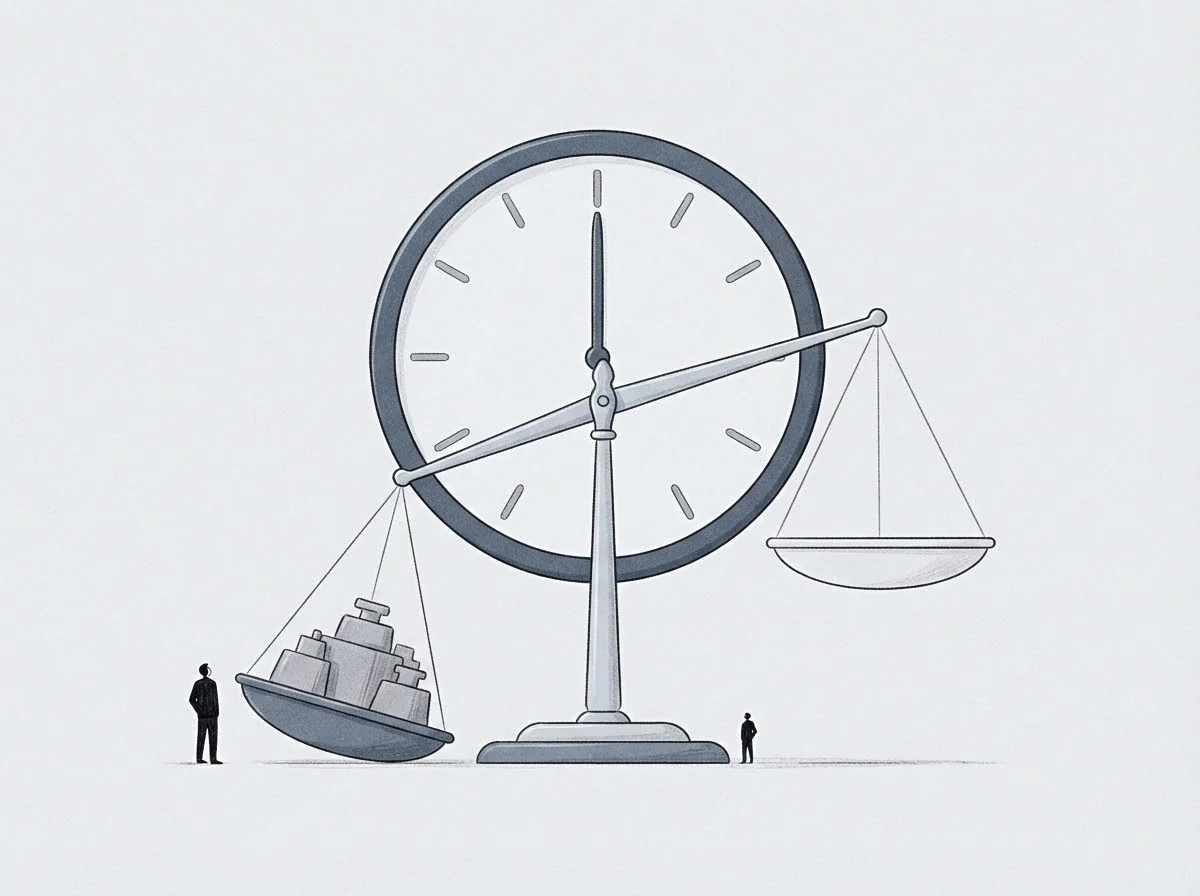
Cryptographic primitives lose their mathematical guarantees over chronological time. An append-only log record sealed with a secure digest algorithm in one decade becomes malleable in the next through sustained advances in computational number theory and hardware parallelization. The record itself remains intact across disk arrays, while the mathematical envelope designed to establish its immutability deteriorates.
When collision attacks against a specific digest function become feasible, an adversary gains the ability to generate alternative log records that yield an identical binary digest. The original entry is stripped of its evidentiary standing.
This erosion occurs without physical warning.
Systems engineers routinely mistake distributed replication for historical durability. Distributing eight copies of an event sequence across multiple cloud availability zones protects the payload against hardware loss, magnetic fading, and node failure. That geographic spread offers no protection against the structural obsolescence of the signature scheme that binds the log entries together.
A historical log record protected by an outdated asymmetric key signature provides zero verifiable proof of non-repudiation once the underlying mathematical problem yields to factoring improvements. The signature is mathematically spoofable.
A digest algorithm compromises its evidentiary payload the moment collisions become computationally accessible within standard commercial budgets.
Log records created twenty years ago under legacy standards present an urgent administrative exposure. When an auditor or opposing legal counsel reviews a historical access log or an equity issuance event recorded in 2004, verification relies entirely on mathematical relationships evaluated in today’s computational environment. If the signature key length is 1024 bits under RSA, or if the hash tree relies on SHA-1, a defender cannot establish whether the record existed in that state at the stated date or was synthesized yesterday.
The proof collapsed while the data sat undisturbed.
Archival degradation manifests through three distinct vectors across distributed log architectures:
- Digest collision vulnerability permits adversaries to manufacture alternate log entries matching original Merkle leaves without invalidating historical root commitments.
- Asymmetric key deprecation invalidates non-repudiation assertions once private keys become derivable through advances in quantum algorithms or integer factorization techniques.
- Anchor trust abandonment severs verification chains when intermediate certificate issuers, revocation hosts, or public key directories cease operational existence.
A distributed database that preserves byte order without upgrading its cryptographic anchors guarantees nothing beyond internal syntax consistency.
The failure to account for primitive degradation leaves an institution unable to prove whether historical records were authentic corporate actions or retroactive fabrications.

Shelf

Physical Media Drift and Structural Parsing
Storage media degrades independently from the mathematics protecting the data. Magnetic tapes experience bit rot, solid-state drives lose gate charges during prolonged power detachment, and optical layers undergo dye degradation. A distributed system counters these physical realities through background scrubbers, Reed-Solomon erasure coding, and continual replication.
These automated operations read raw blocks, recalculate parity bits, and rewrite corrupted sectors onto fresh physical media. The hardware shelf remains operational across twenty years through continuous underlying hardware substitution.
Bit-level repair introduces subtle validation risks for cryptographic logs. If an erasure-coding engine reconstructs a corrupted chunk of an immutable log file, the recovered data must match the original cryptographic digest byte for byte. A single bit drift alters the resulting cryptographic hash entirely.
The storage engine preserves the file system namespace while corrupting the verification pathway.
The file survived.
The signature broke.
Physical media preserves raw bit streams while the semantic ability to verify those bits diminishes through hardware and format turnover.
Log formats suffer from serialization obsolescence alongside physical media transitions. Early distributed systems encoded log entries in platform-specific binary structures, obsolete ASN.1 definitions, or bespoke delimited protocols. Decades later, running an evidentiary validation cycle requires parsing the exact raw byte stream into memory prior to hashing.
If the serialization specification left byte ordering ambiguous, or if contemporary parser libraries normalize whitespace differently, the calculated hash will diverge from the historical digest.
Engineers discover this divergence during formal investigations. The operator retrieves historical logs from cold archival tiers, loads the binary blobs into modern diagnostic tooling, and executes validation algorithms. The tooling rejects the records as altered because modern parsers canonicalize the log schemas differently than the software running when the transaction closed.
The authentic record appears tampered with under contemporary evaluation.
Storage media migrations require immediate re-verification of every cryptographic leaf before the source media leaves operational custody.

Stamp

Temporal Validation and Merkle Traversal
A bare cryptographic signature verifies key possession, not creation time. An actor in possession of an expired or compromised historical signing key can generate backdated records at will unless external time evidence pins the signature to a specific epoch. Long-term log records require independent temporal validation to prove that a signature existed prior to algorithm retirement, key revocation, or key leakage.
The timestamp acts as an evidentiary fence.
Distributed timestamping systems achieve this anchor through hierarchical accumulation. Thousands of discrete event records enter an append-only Merkle tree within a given operating window. The tree hashes paired leaves recursively until a single Merkle root emerges for that temporal block.
This single root is submitted to an external time-stamping authority operating under RFC 3161 standards or committed directly into a widely witnessed decentralized consensus chain. Every individual log entry inside that block inherits an immutable temporal anchor via its Merkle inclusion proof.
| Architecture Mode | Evidentiary Longevity | Verification Independence | Maintenance Complexity |
|---|---|---|---|
| RFC 3161 Timestamp Authority | Medium (Bound to CA lifecycle) | Low (Requires active directory) | High (Periodic token re-stamping) |
| Recursive Merkle Trees (RFC 4998) | Extensible (Linear chaining) | High (Autonomous math proof) | Medium (Scheduled hash renewal) |
| Decentralized Ledger Anchoring | High (Distributed consensus) | High (Global witness quorum) | Low (Static external block height) |
Temporal anchoring fails if the time-stamping service relies on an algorithm weaker than the log system it authenticates. If a distributed system computes SHA-512 hashes for its transaction records but submits the resulting batch roots to an external timestamping server using SHA-1, the security ceiling drops to the weaker function. An adversary targeting the log attacks the timestamp authority, fabricating an earlier commitment date for an altered log entry.
The structural survival of a timestamp depends on witness dispersion. An internal timestamp authority under the administrative control of the system operator carries low evidentiary weight during disputes between corporate partners. The opposing side claims the operator simply changed the clock on the local timestamp server.
Merkle roots committed into public, independent registries eliminate this defense. The record holder demonstrates that the hash existed publicly within an immutable block height visible to thousands of independent observers.
The evidentiary value of an entry collapses whenever the timestamp certificate expires without an antecedent renewal stamp proving the certificate was valid at the moment of application.
Renewal
Evidence Record Syntax and Hash Ratcheting
Preserving long-term evidentiary standing requires proactive cryptographic renewal. The established technical standard for this operational maintenance is Evidence Record Syntax, formalized in RFC 4998 and RFC 6283. Rather than altering historical log entries or re-signing old payloads with new keys, Evidence Record Syntax builds an external, recursive wrapper around immutable records.
The historical payload remains untouched at the byte level, shielding downstream systems from data corruption while extending mathematical durability across technological shifts.
The renewal engine monitors cryptographic standards bodies for algorithm sunset advisories. When cryptanalytic literature demonstrates that a hash algorithm approaches practical collision vulnerabilities, the renewal daemon initiates an archive maintenance sweep. The daemon loads the original leaf data along with its historical Merkle path and timestamp tokens.
It calculates a new Merkle tree over the entire verification bundle using a modern, collision-resistant hash function, such as SHA-3 or post-quantum lattice alternatives.
The operator executes renewal through a sequential operational pipeline:
- Archive baseline audit identifies every historical log segment protected by algorithms scheduled for regulatory or mathematical deprecation within thirty-six months.
- Hash tree re-computation evaluates existing leaf nodes, proof paths, and expired timestamps into a fresh Merkle root using contemporary post-quantum primitives.
- External root notarization submits the newly aggregated root to an independent time-stamping registry to secure an updated temporal baseline.
- Syntax envelope appending attaches the resulting Archive Timestamp chain directly to the metadata repository without modifying original binary log records.
This recursive structure forms a mathematical ladder. A verifier fifty years in the future traces the record from its original, obsolete primitive upward through successive layers of archive timestamps. Each layer was applied while its predecessor was computationally secure and verified by a valid timestamp.
The proof holds because the security chain was upgraded before any single link failed.
A cryptographic renewal envelope preserves historical integrity only when appended prior to public demonstration of collisions in the underlying primitive.
Cost governs the frequency of this maintenance cycle. Running full verification audits across petabytes of historical distributed log entries consumes processor cycles, bandwidth, and external notarization fees. Organizations that delay renewal save immediate operational budgets while gambling against sudden algorithmic breakthroughs.
If a practical collision attack against an active algorithm is demonstrated in public research before the renewal sweep completes, every un-renewed log record protected by that primitive enters litigation in a degraded state.
How far into algorithm life cycles can organizations safely postpone renewal passes before the discovery of private attack techniques invalidates archival chains without public warning?

Custody
The Unbroken Evidentiary Path
A distributed log record is ultimately an evidentiary artifact intended to survive corporate restructuring, administrative turnover, and hostile litigation. When a transaction log is brought into an adversarial setting to settle a capitalization table dispute, intellectual property origin, or customer consent event, the court or arbitration panel evaluates custody. The electronic record must prove its own lineage.
An incomplete verification chain shifts the burden of proof back to the party asserting the authenticity of the entry.
Human memory reconstructs events to fit contemporary incentives. A founder recalls granting stock options under one specific formula; a departed executive recalls an entirely different allocation discussed in the same conference room. The human memory of an arrangement decays faster than storage media.
When the parties discover that the log file recording that equity distribution cannot be validated because its cryptographic envelope degraded, the dispute devolves into competing, subjective recollections. The artifact that was built to settle the argument fails.
The record proves what happened only when its mathematical integrity is provable from first principles without relying on the operator’s current goodwill.
Maintaining long-term custody across distributed logs demands treating cryptography as perishable infrastructure. Storage engineers allocate capital for disk replacement, power redundancy, and data migration every five years. The cryptographic metadata securing those same files requires equivalent recurring investment.
Keys age, mathematical assumptions weaken, and external trust roots vanish. Preserving the record requires applying fresh mathematical seals long before the older seals crack under the weight of advancing computation.