
Quantifying Systemic Entropy and Causal Drift Between Distributed Logs and Executive Summaries
Systemic entropy and causal drift emerge when hierarchical reporting strips raw distributed telemetry of concurrent states, replacing deterministic graphs with linear narratives.
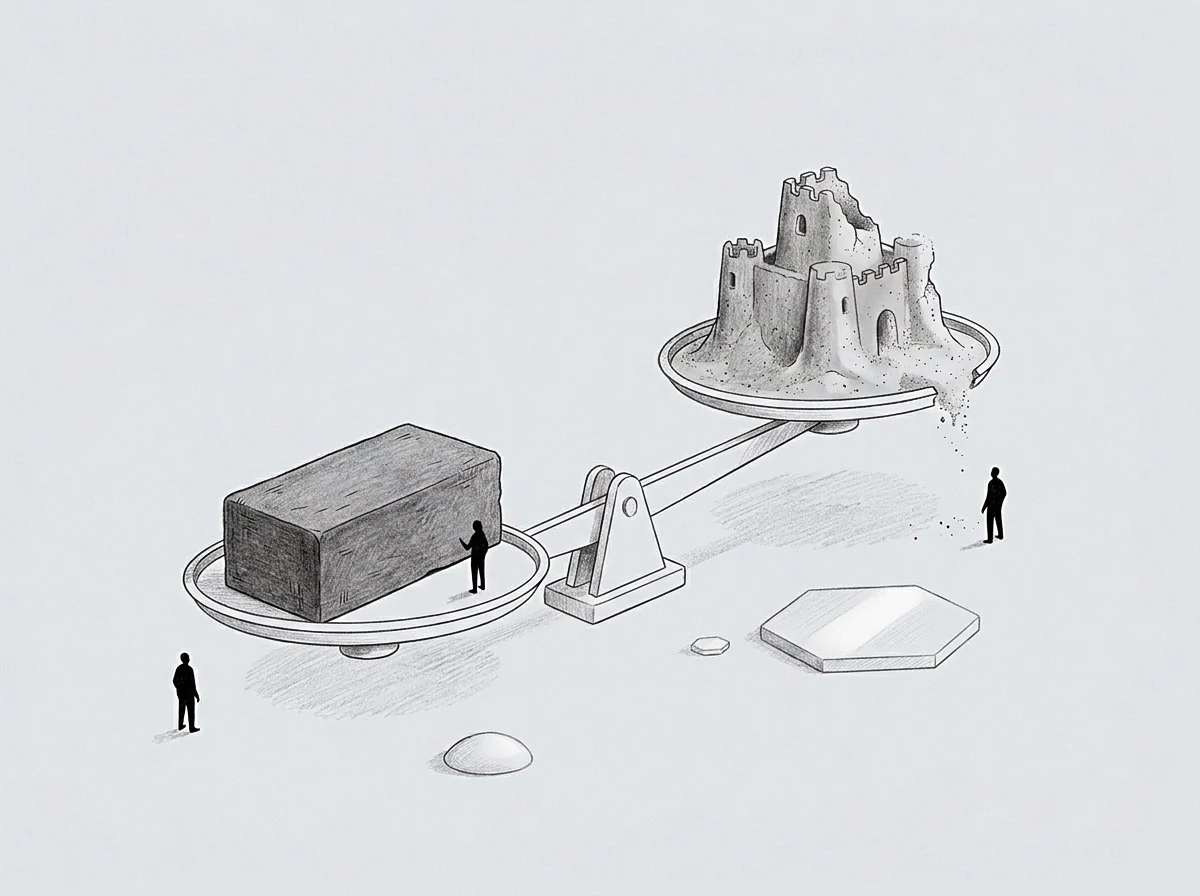
State
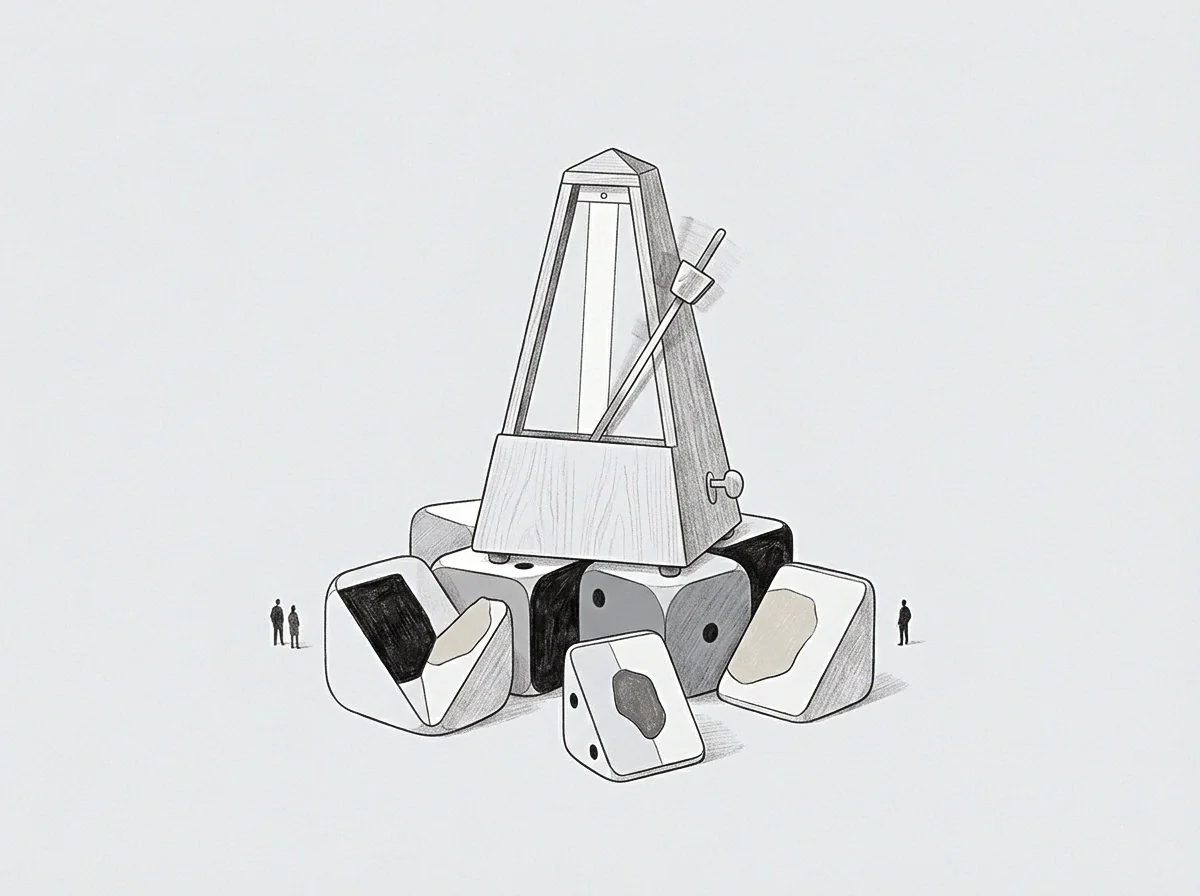
Event Horizon Across Modern Runtime Stacks
Distributed environments emit high-frequency telemetry at rates exceeding hundreds of thousands of events every second across clustered compute nodes. Caches flush variable mutations, container boundaries signal dropped connections, and orchestrators record microsecond scheduling delays. The sheer volume creates noise that makes observation difficult.
In an uncompressed stream, entropy increases alongside the number of decoupled services writing to persistent storage. Because each boundary records local timestamps, ordering concurrently executing threads is rarely straightforward. When an incident unfolds across seventy distinct microservices, the actual failure sequence forms a partially ordered directed acyclic graph rather than a neat linear chain.
An operator reading this raw stream encounters unvarnished machine data. Telemetry collectors record state changes without human intervention or retrospective filtering. A timeout logged at four in the morning might trace back to socket starvation from thread-pool exhaustion on an upstream payment ingress.
The log stores the event as an immutable timestamped payload with a specific numeric error code. Raw telemetry captures what happened because it exists apart from organizational consensus or pride.
A distributed execution trace preserves the physical order of machine failure independent of subsequent organizational consensus.
An engineering team cannot pass raw machine telemetry directly to corporate leadership without overwhelming them. The volume generated during an enterprise outage would exceed human reading capacity within minutes, making condensation essential. An engineering lead might read four thousand raw error traces, strip away thread allocations, and draft a three-sentence summary for the engineering vice president.
In that moment, the narrative shifts away from the actual runtime state. Where the original trace recorded twenty concurrent thread locks across three database read replicas, the summary simply notes that the database experienced elevated pressure. Numeric precision yields to a general adjective.
This loss of detail repeats at every level of management. Each layer filters out peripheral signals to highlight what it considers the primary trigger, a choice often shaped by whichever team reports first. An infrastructure group points to hypervisor migration events, while an application team focuses on unhandled null references inside an external client library.
Both events appear in the raw telemetry with verifiable timestamps. Yet executive documentation often elevates a single event to root cause while omitting the concurrent conditions that allowed it to cascade, widening the gap between technical records and executive understanding.

Filter
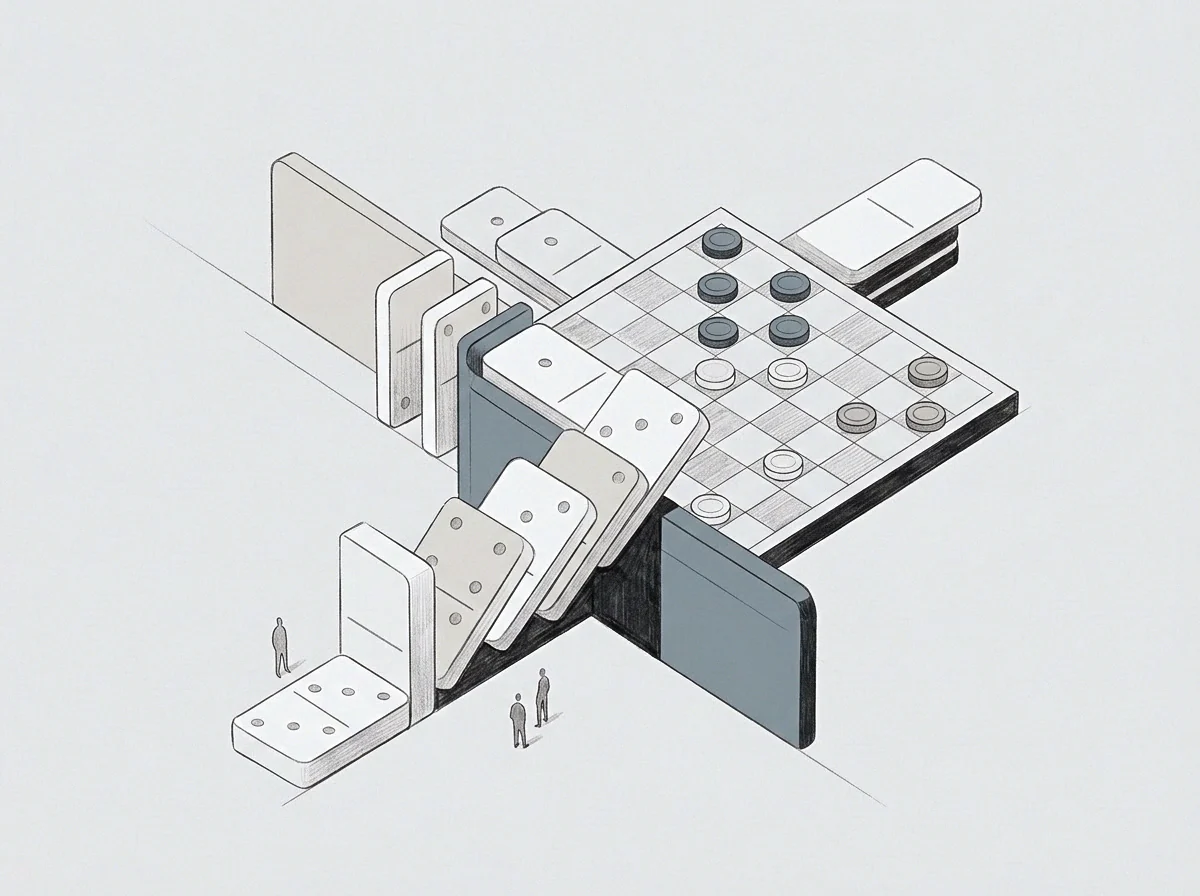
Compression Losses in Hierarchical Reporting Channels
Managerial abstraction functions like lossy compression across organizational tiers. As telemetry traces pass from site reliability engineers to directors, details on concurrency, packet retransmissions, and clock drift get stripped away. The data stream loses dimensionality with every handover.
The Kullback-Leibler divergence between the actual distribution of events and the distribution implied by executive slide decks grows with each tier. Because lossy compression cannot be reversed without an external reference signal, omitting the exact timing of a network split leaves leadership with no way to reconstruct the concurrent failures behind an outage.
This truncation creates causal drift, where the explanatory story separates from the timeline recorded in system databases. An executive summary might state that automated failover preserved customer data integrity, even as underlying telemetry shows a different outcome. In reality, replica nodes executed six desynchronized write operations during the failover window, corrupting four hundred transaction ledgers before an operator halted execution.
The summary presents clean intent, while the event stream records chaos. The report describes an idealized narrative of resilience rather than the event itself.
- Chronological Reordering shifts the apparent start of a failure to align with scheduled maintenance rather than real-time hardware degradation signatures.
- Topological Flattening strips out cross-service dependency loops, presenting concurrent failures as linear sequences pointing to a single vendor fault.
- Severity Attenuation turns deterministic service crashes into vague capacity constraints, hiding structural software defects behind broad resource terminology.
Human memory deepens this filtering. After an incident, participants reconstruct past events, favoring coherent stories over the fragmented, simultaneous alerts that appeared on operational monitors. In interviews conducted twelve days after an operational collapse, lead engineers consistently misremember when critical alerts arrived by upwards of forty-five minutes.
Their memory reorganizes the timeline to fit the hypothesis adopted by the post-incident committee. While memory seeks neat resolution, append-only storage records show alerts firing exactly when the system failed.
Immutable machine logs challenge tidy retrospective narratives. Checking collector timestamps often upends established explanations: an alert may not have followed a configuration push, but arrived twelve minutes before deployment began, showing that degradation existed before the intervention leadership later blamed for the crisis. The physical record clarifies what consensus clouded.
Maintaining that clarity takes technical rigor, infrastructure investment, and the discipline to accept that systems fail through complex conditions rather than isolated human mistakes.
Documentation degrades whenever organizations treat executive presentations as authoritative logs. When slide decks replace immutable traces in capital planning, future architecture decisions rely on oversimplified assumptions. Leadership might fund an external proxy replacement because a deck cited ingress latency as the main issue, even though forty gigabytes of discarded Cassandra compaction traces show the failure stemmed from thread contention on the internal messaging bus.
Capital shifts to the wrong architectural tier, guided by drifted internal summaries.
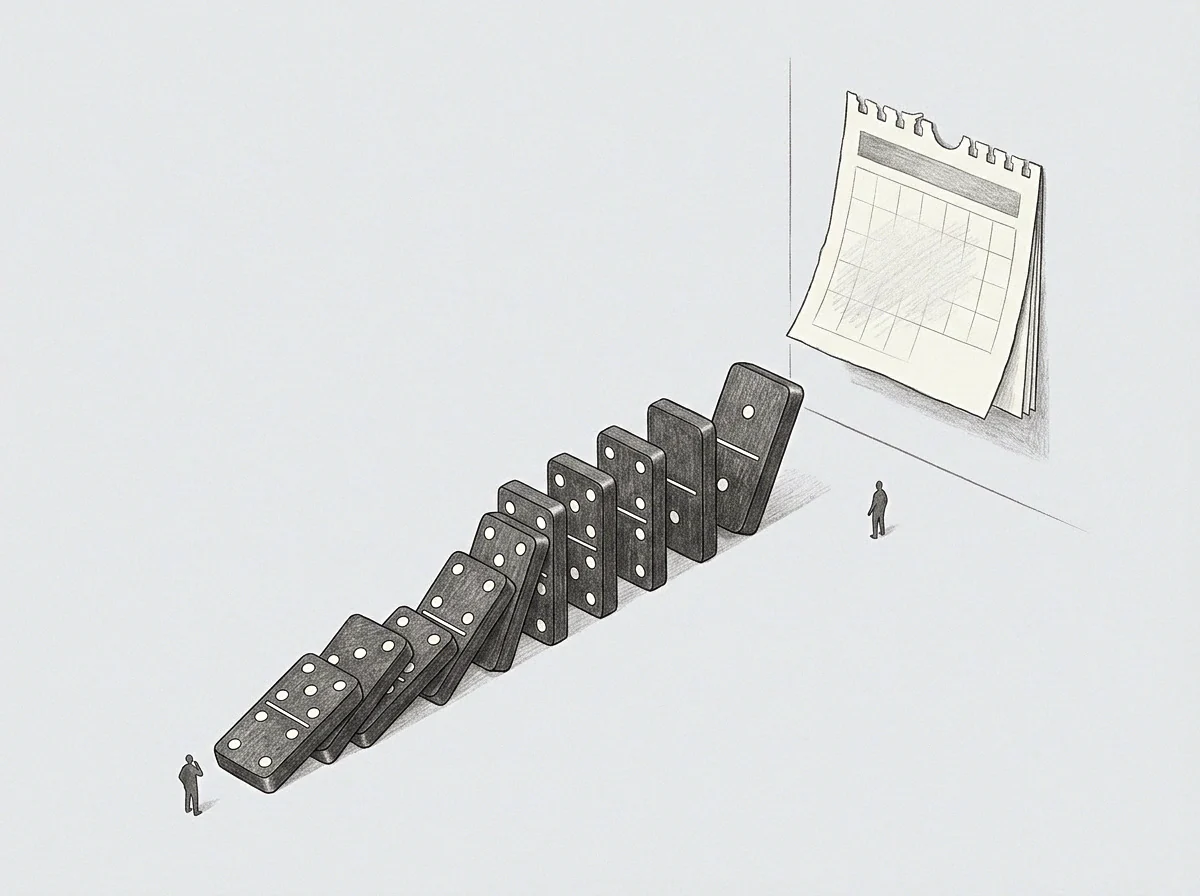
Room
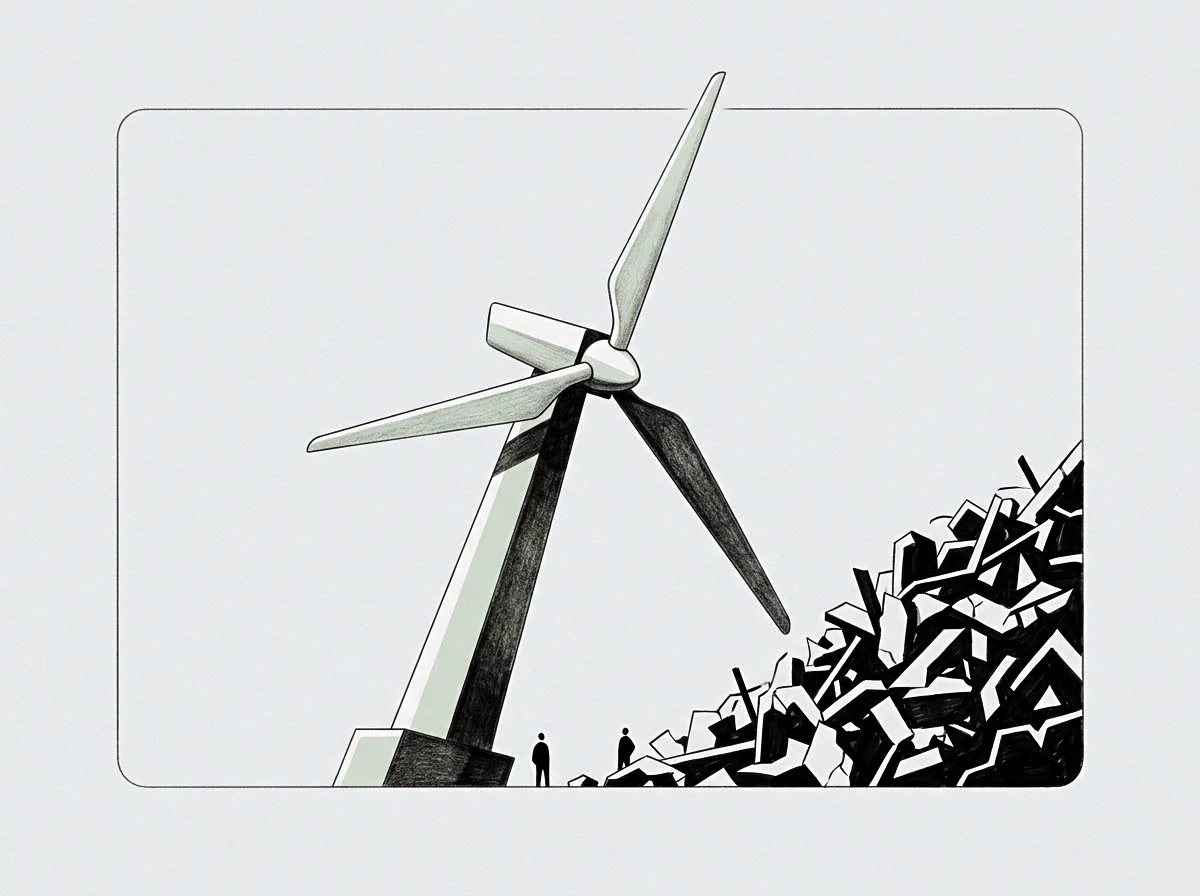
Physical Divergence at the Executive Table
The boardroom table is where compressed operational briefings land. Six corporate executives review a single printed document summarizing a quarterly platform stability crisis. The report presents three bullet points, two bar graphs, and an estimated monetary impact figure calculated by financial controllers.
Absent from the page are ninety million transaction logs, TCP connection resets, and raw timestamps that record what actually occurred. Executives work from an aggregated summary. When asked why the architecture collapsed, the engineering officer attributes the failure to external network provider instability, an explanation accepted because it offers clear attribution without questioning internal design choices.
The server room and the boardroom operate in different realities. Inside the datacenter, cooling fans roar while solid-state drives show write amplification spikes during cascading retry storms. In the boardroom, quiet reigns over sanitized charts.
The executives around the table do not feel the stress that hit on-call engineers five days earlier, and that detachment makes rationalization easy. Discussion turns from technical failure to brand positioning within ten minutes of the opening slide. Telemetry recorded twenty minutes of unrecoverable database split-brain operation, which executive documents describe as a temporary service interruption with minimal client friction.
Operational narratives drifting across hierarchical layers consistently replace concurrent physical faults with comfortable institutional explanations.
Disputes over operational failures often reveal how fragile unrecorded verbal agreements can be. Two senior officers might argue over whether engineering had permission to run a zero-downtime database migration over a holiday weekend. The chief technology officer remembers an explicit agreement from an informal hallway chat, while the chief executive officer remembers conditional approval tied to secondary validation testing that never happened.
Both hold their memories with conviction, though recollection correlates poorly with actual accuracy. Without an immutable record created at the moment of approval, both accounts remain subjective recollections aimed at protecting corporate standing.
Without an immutable bridge record, executive committees get stuck in competing narratives. A technology officer might pull up a retrospective calendar invite to show a meeting took place, while an executive officer presents private notes taken three days after the incident detailing conditions. Neither meets the standard of an operational artifact.
Personal notes function as advocacy rather than shared proof, which requires a record created during the event and committed to an append-only system where modification is impossible. Because the authorization lived only as spoken words in a conference room, the debate devolves into political friction that consumes executive energy for months.

Metric
Quantifying Causal Divergence Between Strata
Measuring divergence between raw telemetry and executive narratives requires formalizing causal structures into directed graphs. An operational log can be modeled as an event graph where nodes denote machine transitions and directed edges mark temporal and causal precedence. When an executive summary claims Event Alpha caused Event Gamma, it asserts a direct causal link.
If distributed traces show Event Beta intervened, or that Event Gamma preceded Event Alpha by four hundred milliseconds according to synchronized clocks, the assertion exhibits measurable causal drift. This drift can be quantified using structural hamming distances between the telemetry graph and the narrative graph.
The table below details the formal transformation parameters across four operational dimensions, illustrating how raw machine state shifts into summarized narrative across organizational boundaries.
| Dimension | Distributed Telemetry Records | Executive Summary Narrative | Divergence Metric Formula |
|---|---|---|---|
| Temporal Resolution | Microsecond timestamps anchored to hardware clocks | Hour-level or day-level narrative blocks | Absolute time delta between declared and physical onset |
| Causal Graph Density | High-density cyclic graph with feedback loops | Single linear path with isolated root cause | Edge difference over total possible node pairings |
| Entropy Measurement | High Shannon entropy across distributed variables | Zero entropy deterministic retrospective declaration | Kullback-Leibler divergence between state spaces |
| Actor Attribution | Concurrent automated process execution | Singular human or vendor agency attribution | Binary mismatch between machine and human IDs |
Entropy accumulates when the structural hamming distance between these graphs goes unmeasured. When strategic decisions rely on narratives that omit seventy percent of actual operational dependencies, technical debt compounds. Leadership underinvests in core runtime stability because sanitized summaries attribute failures to isolated human errors or vendor issues.
Trace records show the opposite: failures stem from tight coupling and unhandled race conditions built into the platform itself.
This gap carries quantifiable capital consequences. When technical debt stays hidden behind compressed reports, infrastructure budgets stagnate, and engineering teams spend hundreds of hours building retrospective defenses instead of fixing race conditions. That mismatch manifests in prolonged outages, lower morale, and reduced velocity.
A company unable to reconcile executive summaries with execution logs makes commitments on unreliable foundations.

Line

Engineering the Unalterable Bridge Record
Eliminating causal drift requires an immutable bridge record connecting high-volume telemetry directly to high-level briefings. This relies on cryptographic immutability, programmatic condensation rules, and rigid temporal anchors. Rather than allowing manual retrospective summaries written in standard document tools, reporting systems must generate narrative options straight from the directed acyclic graph.
An engineering lead cannot blame an external vendor for an outage if trace logs prove internal services initiated the failure sequence. The record must exist where post hoc alteration is impossible.
The architecture rests on deterministic extraction routines. Telemetry collectors process billions of runtime events, apply mathematical clustering to pinpoint anomalous execution paths, and output an intermediate summary. This summary ties each narrative statement to a verifiable hash of raw log entries.
If a slide claims database latency caused checkout timeouts, it must include the cryptographic content identifier referencing the exact database traces. If underlying traces lack that causal link, the system invalidates the draft automatically.
A governance artifact protects systemic integrity only when its narrative statements remain programmatically tied to immutable physical traces.
Implementing this documentary discipline requires establishing precise structural conditions for every operational report produced across the enterprise.
- Cryptographic Trace Anchoring binds summary assertions to an immutable set of log hashes, preventing alteration of failure conditions after management review.
- Graph Topology Verification ensures stated causal relationships match verified temporal precedence across service boundaries.
- Explicit Adjective Elimination replaces qualitative severity terms with bounded quantitative distributions drawn directly from runtime collectors.
- Dual Signature Validation requires both the on-call engineer and operational director to sign off on the telemetry-linked record before board distribution.
Maintaining an unalterable bridge record comes with immediate operational costs. It forces organizations to confront technical deficiencies executives might prefer to overlook, ending the belief that major outages stem from unpredictable flukes rather than architectural degradation. The impulse to soften bad news runs up against a technological barrier.
Unmoved by internal politics, a dated record preserves the exact failure sequence, creating a firm basis for engineering investment and organizational learning.
Committing to this standard changes review sessions. Speculation about what might have happened gives way to analysis of verified trace paths. Engineering teams no longer spend social capital defending against unfounded assumptions.
The bridge record offers a clear account of physical reality, protecting technical teams from unfair blame while preventing leadership from acting on flawed summaries. The operational line is drawn where machine state meets executive oversight, preserved in an artifact resistant to revisionism.
Once signed and cryptographically locked against runtime log hashes, the bridge record permanently fixes the causal explanation of an incident in organizational memory.